

Looking for the best UV sensors of 2025? You can’t go wrong with options like the Solarmeter Model 6.5R for reptiles or the Digital Tint Meter for quick tint checks. The REPTI ZOO UVB Tester is great for monitoring UVB bulbs, while the Sunlight UV Index Meter alerts you when it’s time to seek shade. Plus, the Waveshare Digital LTR390-UV is perfect for tech enthusiasts. Keep your skin safe and learn about more top choices to enhance your sun protection strategies.
Solarmeter Model 6.5R Reptile UV Index Meter

If you’re a dedicated reptile owner or a professional in veterinary care, the Solarmeter Model 6.5R Reptile UV Index Meter is an essential tool for ensuring your pets receive the proper UV exposure. This compact device measures ultraviolet light from 280-400 nm, displaying a UV Index range of 0-199.9. Its erythemally weighted spectral response matches the Vitamin-D needs of reptiles, helping prevent health issues. Users report improved reptile health after checking UV bulb quality, making it invaluable for monitoring UV levels. Though some find it pricey, many agree it’s a worthwhile investment for maintaining your reptile’s well-being.
Best For: The Solarmeter Model 6.5R is best for dedicated reptile owners and veterinary professionals seeking to ensure proper UV exposure for reptiles.
Pros:
- Compact and handheld design makes it easy to use and transport.
- Provides accurate UV measurements essential for reptile health maintenance.
- Helps prevent health issues related to inadequate UV exposure by monitoring bulb quality.
Cons:
- Some users find the price to be high, limiting accessibility for all reptile owners.
- Reports of battery life issues and performance concerns after limited use.
- Requires regular testing of bulbs for accurate readings, which may be seen as an inconvenience.
Digital Tint Meter Handheld Window Tint Tester

The Digital Tint Meter Handheld Window Tint Tester is an invaluable tool for automotive enthusiasts and professionals in the window tinting industry. This lightweight device measures UV, IR, and visible light transmittance, ensuring you get accurate readings every time. With Type-C charging and a 750mAh rechargeable battery, it’s convenient to use. It features a fast test lock for instant results and advanced self-calibration for precise measurements. Users have praised its ease of use, making it perfect for checking tint legality or comparing films. Although some noted the lack of a manual power-off, its overall performance remains impressive.
Best For: Automotive enthusiasts and professionals in the window tinting industry looking for accurate and reliable tint measurements.
Pros:
- Easy to use with quick and accurate readings for UV, IR, and visible light transmittance.
- Lightweight design with a contoured grip for comfortable handling and portability.
- Rechargeable battery with Type-C charging for convenience and efficiency.
Cons:
- Lacks a manual power-off feature, which may lead to constant measuring.
- Some users reported a need for more detailed instructions in the manual.
- Limited to measuring a maximum thickness of 1/2 inch, which may not cover all applications.
REPTI ZOO UVB Tester for Reptile Lamps (Set of 2)
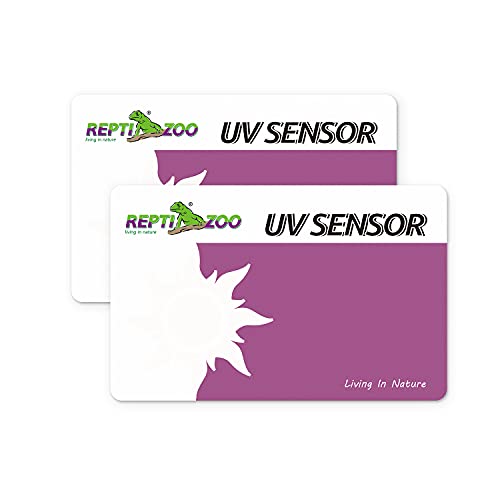
For reptile enthusiasts looking to guarantee their pets receive ideal UVB exposure, the REPTI ZOO UVB Tester is an essential tool. This set of two cards measures UVB intensity from fluorescent lamps, changing color from white to purple based on strength. Each card is credit card-sized, reusable up to 500 times, and made from eco-friendly materials. In just about 10 seconds, you can check UVB levels in your reptile’s habitat, ensuring best lighting for their health. With a 4.6-star rating, users report improved reptile activity after adjusting UVB lighting, providing peace of mind in your pet care routine.
Best For: Reptile owners and enthusiasts who want to ensure their pets receive optimal UVB exposure for health and activity.
Pros:
- Easy to use and economical, offering two cards for $7.99.
- Effective for regular checks on UVB bulbs, enhancing reptile care.
- Compact size allows for convenient storage and use.
Cons:
- Not a precision instrument and lacks a color guide for UV levels.
- Requires waiting for color to fade between tests when checking multiple spots.
Sunlight UV Index Meter with UV Hurt Alarm

Ideal for outdoor enthusiasts and families, the Sunlight UV Index Meter with UV Hurt Alarm keeps you informed about harmful UV exposure. It accurately measures UV index levels, alerting you when you’re at risk of sunburn. You can customize your UV tolerance and receive timely notifications when thresholds are exceeded. Compact and easy to carry, it fits effortlessly in your bag. With a long-lasting AAA battery, you won’t have to worry about frequent replacements. While users appreciate its accuracy and effectiveness, consider opting for fresh batteries for the best performance and suggesting improvements like a waterproof design for added convenience.
Best For: Outdoor enthusiasts and families looking to monitor UV exposure and prevent sunburn.
Pros:
- Accurate readings that align with professional weather stations and apps.
- Customizable UV tolerance settings that provide alerts when thresholds are exceeded.
- Long-lasting battery life that minimizes the need for frequent replacements.
Cons:
- Initial battery may be dead, requiring users to purchase fresh batteries for optimal performance.
- Lacks a waterproof design, limiting use in wet conditions.
- No built-in clip or carrying case for easier attachment to clothing or bags.
Waveshare Digital LTR390-UV Ultraviolet Sensor (Compatible with Raspberry Pi/Arduino/STM32)

Engineered for tech enthusiasts and developers, the Waveshare Digital LTR390-UV Ultraviolet Sensor offers a robust solution for measuring ultraviolet rays and visible light. This compact I2C digital UV sensor, measuring just 27 × 20mm, operates at both 3.3V and 5V, making it versatile for your projects. With a response spectrum of 280 – 430nm, it provides accurate light intensity values through its embedded ADC. You’ll appreciate its high sensitivity, fast response, and easy integration with Raspberry Pi, Arduino, or STM32. Plus, it includes development resources to get you started quickly. Enjoy precise sun protection measurements today!
Best For: Tech enthusiasts and developers looking for a reliable UV sensor for projects involving light measurement.
Pros:
- High sensitivity and fast response for accurate light intensity readings.
- Compact design allows for easy integration into various devices.
- Compatible with multiple platforms including Raspberry Pi, Arduino, and STM32.
Cons:
- Some users have reported issues with the longevity of online guides.
- Software dependencies may complicate setup for beginners.
- Limited warranty information provided, which could be a concern for some buyers.
2PCS UV Inspection Sensor Module for Arduino

The PCS UV Inspection Sensor Module for Arduino stands out for hobbyists and developers who want to create reliable sun protection solutions. This module operates between 3.3V and 5V and accurately measures the UV Index, detecting wavelengths from 200-370nm. You’ll appreciate its fast response speed and strong interchangeability in various projects. It complies with World Health Organization standards, ensuring reliable readings. During testing, you can expect analog input readings around 100-120 out of 1023. However, keep in mind that the lack of detailed component specifications might hinder your overall evaluation. Still, it’s a solid choice for your UV detection needs.
Best For: Hobbyists and developers looking to create reliable sun protection solutions with accurate UV measurements.
Pros:
- High reliability and accuracy in measuring UV Index (UVI).
- Fast response speed and strong interchangeability for various projects.
- Complies with World Health Organization standards for UV detection.
Cons:
- Lack of detailed component information and specifications may limit usefulness.
- Limited documentation could affect troubleshooting and customization.
- Performance testing results may vary depending on specific Arduino configurations.
Solarmeter Model 6.5 UV Index Meter
Product not found or API error.
For outdoor enthusiasts who want to stay safe under the sun, the Solarmeter Model 6.5 UV Index Meter is an essential tool. This compact, handheld device measures ultraviolet light from 280-400 nm, providing you with accurate UV index readings from 0-199.9. Its simple one-button operation makes it easy to use while you’re running, hiking, or swimming. Powered by a long-lasting 9-volt battery, it helps you monitor UV exposure to avoid sunburn and skin damage. While some users wish for a hold function, it’s still portable and reliable, giving you the information you need to enjoy the outdoors safely.
Best For: Outdoor enthusiasts, athletes, and individuals with sensitive skin who want to monitor UV exposure and stay safe under the sun.
Pros:
- Compact and portable design for easy use during outdoor activities.
- Accurate UV index readings help prevent sunburn and skin damage.
- Long-lasting battery life of up to 2 years for extended use.
Cons:
- Readings are only displayed while the button is pressed, lacking a hold function.
- Some users report inconsistent readings or calibration issues.
- Not designed for medical purposes, which may limit its use for some users.
Factors to Consider When Choosing Uv Sensors
When choosing UV sensors, you’ll want to contemplate several key factors. Measurement range and accuracy are essential for reliable readings, while the type of UV radiation measured can impact your sun protection strategy. Don’t forget portability, battery life, and ease of use, as these features can make a big difference in your daily routine.
Measurement Range and Accuracy
Choosing the right UV sensor involves careful consideration of measurement range and accuracy, as these factors greatly impact the reliability of your readings. Different sensors detect UV light across specific wavelengths, typically from 280 nm to 400 nm. Make sure the sensor offers NIST traceable accuracy for dependable readings that meet established standards. Some sensors might only measure up to 199.9 UV Index, which is essential for monitoring UV exposure for skin safety or reptile health. The spectral response should align with your intended use; for instance, sensors for reptiles should be erythemally weighted to reflect the relevant UVB spectrum. Finally, check user feedback, as some sensors provide instantaneous readings while others require continuous button presses for measurement.
Type of UV Radiation
Understanding the type of UV radiation your sensor measures is essential for ensuring it meets your specific needs. UV radiation falls into three categories: UVA, UVB, and UVC. UVA rays penetrate deeply, causing skin aging and long-term damage. UVB rays are more intense, leading to sunburn and increasing skin cancer risk. While UVC rays are the most harmful, they’re mostly absorbed by the ozone layer, making them less relevant for daily exposure. When choosing a UV sensor, consider its spectral sensitivity; some sensors measure specific UV ranges more accurately than others. Depending on your application—be it skin protection or material preservation—you’ll want a sensor that effectively monitors the UV radiation type most relevant to you.
Portability and Design
Portability and design play an essential role in selecting the right UV sensor, especially if you’re planning to use it outdoors. A lightweight and compact sensor makes transport easy, allowing you to carry it without hassle. Look for features like a contoured grip and lanyards for improved handling and convenience. Smaller dimensions and lighter weight enhance usability, enabling quick, on-the-go measurements when you need them most. Additionally, ergonomic design elements such as easy-to-read displays and simple control operations contribute to user-friendliness. By prioritizing these aspects, you’ll guarantee that your UV sensor not only fits seamlessly into your outdoor activities but also provides the functionality you need for effective sun protection.
Battery Life and Power
When it comes to UV sensors, battery life and power are essential factors that can greatly impact your experience. Some sensors can last up to one year on a single AAA alkaline battery, while others may need frequent replacements based on how often you use them. If you’re looking for sustainability and cost-effectiveness, consider models with rechargeable batteries. Additionally, certain UV meters powered by a 9-volt DC battery can last up to two years, making them ideal for long-term use. Always check the power source and battery specifications to match your usage frequency. Remember, fresh batteries can notably enhance the accuracy and responsiveness of your UV sensor, so make sure you keep them replaced as needed.
Ease of Use
Battery life and power are important, but ease of use plays an essential role in your overall experience with UV sensors. Look for models featuring simple single-button operation, allowing you to quickly check UV levels without fussing over complex settings. Clear, easy-to-read LCD displays are vital, especially in bright sunlight, ensuring you don’t strain to see the readings. Instant readings are a must; you want to assess UV levels without waiting around. Lightweight and portable designs make handling and transporting your sensor during outdoor activities a breeze. Finally, consider user-friendly features like a hold function for maintaining readings, as this can greatly enhance your overall experience. Choose wisely, and enjoy a hassle-free UV monitoring experience!
Calibration and Maintenance
To guarantee your UV sensor delivers accurate readings, regular calibration and maintenance are essential. Even minor deviations can greatly affect your measurement of UV exposure levels. Look for sensors with NIST traceable accuracy, especially if you’re using them for scientific or medical purposes. Follow the manufacturer’s recommendations for calibration intervals; frequent use or harsh conditions might require more frequent adjustments. Routine maintenance, like battery checks and cleaning sensor surfaces, will enhance the sensor’s lifespan and reliability. Additionally, keeping a record of calibration dates and results can help you track performance over time, ensuring your UV sensor remains dependable. Prioritize these steps to enjoy maximum sun protection with confidence.
Application Versatility
Considering the diverse applications of UV sensors, it is crucial to choose one that meets your specific needs. Whether you’re measuring UV exposure for outdoor activities, monitoring UV levels in reptile habitats, or evaluating window tint effectiveness, application versatility is key. Some sensors are tailored for testing UVB intensity in fluorescent lamps, ensuring your reptiles receive ideal care. Many also measure multiple light types, including UV, infrared, and visible light, making them perfect for thorough analyses in various fields. Additionally, the ability to integrate sensors with platforms like Arduino and Raspberry Pi allows for unique projects and detailed data logging. Look for features like self-calibration and fast response times to enhance reliability across different environments.
Price and Value
When it comes to selecting UV sensors, price and value are essential factors that can greatly influence your decision. Basic models start around $8, while advanced handheld meters can exceed $200. Higher-priced options often offer professional-grade accuracy and additional features, which can be worth the investment for serious users. Consider longevity and reliability; some models boast long battery life or reusable features, saving you money in the long run. User feedback suggests that sensors providing accurate, real-time readings considerably enhance perceived value by helping you avoid health risks. Economical choices may work for casual users, but if you’re dedicated, investing in a higher-priced model can improve your monitoring capabilities and effectiveness.


