

Looking for the best sound sensors of 2025? You’ve got great options! The WWZMDiB Sound Sensor offers high sensitivity, while the FainWan microphone sensor module includes six sensors for versatile applications. The KY-037 DIY kit features adjustable sensitivity and customizable outputs. Don’t miss out on the powerful Solar Motion Sensor Alarm, perfect for both indoor and outdoor use. Keep exploring to discover more about these top picks and find the perfect fit for your projects!
WWZMDiB Sound Sensor for Arduino (10 Pcs)
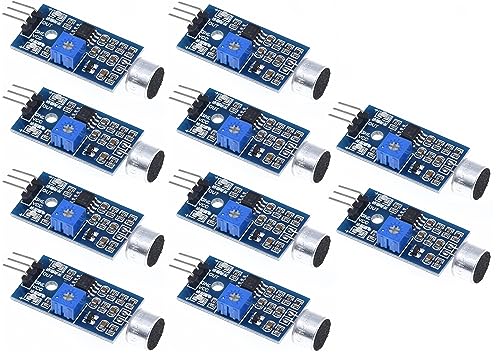
If you’re an electronics enthusiast or a hobbyist working with Arduino projects, the WWZMDiB Sound Sensor is an excellent choice for you. This sensor detects sound presence and absence using a microphone based on the vibration principle. With an operating voltage range of 3.3V-5V, it’s versatile and compatible with various platforms like AVR and ARM. You’ll appreciate the adjustable threshold via a built-in potentiometer for precise sound detection. The package includes ten sensors, making it a great value. Rated 4.8 out of 5 stars, it’s a reliable option for your projects, ensuring quality and performance.
Best For: Electronics enthusiasts and hobbyists working on Arduino projects who need a reliable sound detection solution.
Pros:
- Versatile compatibility with various platforms including Arduino, AVR, and ARM.
- Adjustable sound detection threshold for precise customization.
- Includes ten sensors in a package, offering great value for projects.
Cons:
- May require additional components for optimal performance under varying temperature conditions.
- Limited return policy after 30 days may restrict customer satisfaction.
- Performance can be affected by temperature changes, necessitating careful use in different environments.
FainWan 6Pcs High Sensitivity Microphone Sensor Module for Arduino

The FainWan 6Pcs High Sensitivity Microphone Sensor Module is an excellent choice for hobbyists and developers looking to integrate sound detection into their Arduino projects. This package includes six sensors, allowing for multiple applications like clap-controlled devices or noise detection. With both analog and digital outputs, you can easily monitor sound intensity and adjust sensitivity via a potentiometer. Weighing just 0.15 kg, it’s lightweight and easy to install with 3mm screw holes. While some users reported sensitivity issues, most found it effective for basic sound detection. Plus, you can return it within 30 days if needed.
Best For: Hobbyists and developers looking to incorporate sound detection into their Arduino projects.
Pros:
- Includes six high sensitivity microphones for versatile applications.
- Offers both analog and digital outputs for monitoring sound intensity.
- Lightweight and easy to install with 3mm screw holes.
Cons:
- Some users reported difficulties in achieving the desired sensitivity.
- Limited documentation may pose challenges during setup.
- Primarily functions as a loudness detector, lacking frequency sensitivity.
8pcs Microphone Sound Sensor KY-037 DIY Kit

For DIY enthusiasts and hobbyists, the 8pcs Microphone Sound Sensor KY-037 DIY Kit stands out as an excellent choice in the field of sound detection. This kit features high sensitivity sound detection, making it perfect for various projects. With a working voltage of DC 3.3V-5.5V, it’s easy to power up using a 5V DC supply. You’ll appreciate the adjustable sensitivity and dual outputs: analog for real-time signals and digital for sound thresholds. The durable design includes a power indicator and a 3mm mounting screw hole, ensuring seamless installation in your setups, from Arduino projects to CB radio applications.
Best For: DIY enthusiasts and hobbyists looking for high sensitivity sound detection modules for various projects.
Pros:
- High sensitivity sound detection suitable for a wide range of applications.
- Dual outputs (analog and digital) allow for flexible integration into projects.
- Easy installation with a durable design and mounting screw hole.
Cons:
- Requires a 5V DC power supply, which may limit some project setups.
- Adjustable sensitivity may require fine-tuning for optimal performance.
- Compatibility with specific systems may necessitate additional wiring knowledge.
Sound Sensor Sound Detector for Arduino and Raspberry Pi (5 Pieces)

Ideal for hobbyists and developers, the Sound Sensor Sound Detector for Arduino and Raspberry Pi comes in a convenient pack of five, making it perfect for multiple projects. This versatile sensor detects ambient sound intensity and outputs a digital signal that indicates sound levels, switching between LOW and HIGH. You can easily customize its sensitivity using the adjustable triggered threshold via a built-in potentiometer. Whether you’re working on home automation, alarms, or environmental monitoring, this sound detector seamlessly integrates with popular microcontrollers like Arduino and Raspberry Pi, enhancing your projects’ capabilities and functionality.
Best For: Hobbyists and developers looking for a versatile sound detection solution for their Arduino or Raspberry Pi projects.
Pros:
- Customizable sensitivity with adjustable triggered threshold via built-in potentiometer.
- Compatible with multiple microcontroller platforms, enhancing project versatility.
- Comes in a pack of five, allowing for multiple applications and projects.
Cons:
- Digital output may not provide detailed sound analysis.
- Limited functionality for detecting specific sound frequencies or types.
- Requires some technical knowledge to integrate with microcontrollers effectively.
LM393 Sound Sensor Module (Pack of 5)

Offering impressive sensitivity and versatility, the LM393 Sound Sensor Module (Pack of 5) is perfect for hobbyists and developers looking to incorporate sound detection into their projects. This high-sensitivity microphone module, compatible with Arduino, operates on a working voltage of DC 3.3-5V. Its onboard potentiometer allows you to adjust sound detection thresholds easily, and the LED indicator lights up when sound is detected. Ideal for applications like predator monitoring and escape room devices, users appreciate its effectiveness in controlled environments. Just power it up, tweak the potentiometer, and you’re ready to create innovative sound-responsive projects.
Best For: Hobbyists and developers looking to integrate sound detection into Arduino projects.
Pros:
- High sensitivity microphone for effective sound detection.
- Adjustable sound threshold via onboard potentiometer for customizable performance.
- Versatile applications, including predator monitoring and use in escape rooms.
Cons:
- Less reliable performance in outdoor environments due to background noise.
- Limited capability to differentiate between sound sizes or specific frequencies.
- Requires initial setup and adjustment, which may be challenging for beginners.
WWZMDiB Sound Sensor Compatible with Arduino (10 Pcs)
The WWZMDiB Sound Sensor is a perfect choice for hobbyists and engineers looking to integrate sound detection into their Arduino projects. This package includes 10 sensors, all capable of detecting sound through a microphone using the vibration principle. Operating between 3.3V and 5V, you can easily adjust the sensitivity with the built-in potentiometer. It’s versatile too, compatible with various platforms like AVR and ARM. Weighing only 1.76 ounces, these compact sensors deliver impressive performance, boasting a 4.8-star rating. Plus, you can return them within 30 days if they arrive damaged or don’t meet your expectations.
Best For: Hobbyists and engineers seeking to incorporate sound detection into their Arduino projects.
Pros:
- Versatile Compatibility: Works with various platforms including Arduino, AVR, ARM, and PIC.
- Adjustable Sensitivity: Features a built-in potentiometer for easy sensitivity adjustments.
- High Customer Rating: Boasts a strong rating of 4.8 out of 5 stars from users, indicating high satisfaction.
Cons:
- Temperature Sensitivity: Transistor gain stability can be affected by temperature changes, requiring additional components for stabilization.
- Limited Return Window: Returns are only accepted within 30 days, which may be restrictive for some customers.
- Noisy Environment Limitations: Performance may vary in very loud or quiet environments due to the nature of sound detection.
Solar Motion Sensor Alarm for Outdoor & Indoor Use

For those seeking a reliable solution to protect their property, the Solar Motion Sensor Alarm stands out with its impressive 130 dB sound level, effectively deterring unwanted visitors. This alarm features customizable modes, allowing you to set alerts for 24-hour or nighttime detection. You can even record your own sounds, like barking dogs, to add a personal touch. With solar power and a USB backup, it guarantees continuous operation. Installation is straightforward, fitting seamlessly into your outdoor or indoor spaces. While some users note sensitivity issues, the adjustable volume helps keep your neighbors undisturbed, making it a solid choice for security.
Best For: Individuals looking for a customizable and effective motion detection alarm to enhance their property’s security.
Pros:
- Customizable alerts with options for personal recordings and adjustable volume control.
- Solar-powered with a USB backup ensures reliable operation, even in adverse weather.
- Easy wall-mounted installation, suitable for both indoor and outdoor use.
Cons:
- Some users report sensitivity issues with motion detection, requiring adjustments.
- Average customer rating of 3.4 out of 5 stars indicates mixed experiences.
- May disturb neighbors if volume is not carefully adjusted.
Factors to Consider When Choosing Sound Sensors
When choosing a sound sensor, you should consider several key factors to guarantee it meets your needs. Think about sensitivity adjustment options, compatibility with your existing platforms, and power supply requirements. Additionally, look at the available output types and how versatile the sensor is for different applications.
Sensitivity Adjustment Options
Choosing the right sound sensor often hinges on its sensitivity adjustment options, as these features can greatly impact your project’s effectiveness. Many sound sensors come with a built-in potentiometer, letting you customize the sensitivity threshold to match your specific detection needs. This adjustable sensitivity helps differentiate between background noise and significant sounds, enhancing applications like alarms and automation systems. Some models offer both analog and digital outputs, providing real-time voltage signals or sound level indicators based on your adjustments. Keep in mind that while higher sensitivity captures quieter sounds, it may also lead to false positives from ambient noise. Different models cater to various environments, so consider your project’s unique demands when selecting a sound sensor.
Compatibility With Platforms
As you explore options for sound sensors, compatibility with your chosen platform is essential for ensuring smooth integration and functionality. Many sound sensors are designed to work with popular microcontroller platforms like Arduino, Raspberry Pi, and others, providing flexibility for your projects. Typically, they operate within a voltage range of 3.3V to 5V, which matches most systems, making integration straightforward. Look for sensors with adjustable thresholds, as these allow you to customize sensitivity based on your project’s needs. Additionally, consider whether the sensor offers analog or digital outputs, so you can select the type that best fits your application. Finally, check the connectivity options, whether wired or wireless, to guarantee seamless integration with your setup.
Power Supply Requirements
Power supply requirements play an important role in the performance of sound sensors, impacting their reliability and functionality. Most sound sensors operate at voltage levels ranging from 3.3V to 5V, making compatibility with microcontrollers essential. When choosing a sound sensor, consider its power source—whether it’s battery-operated or requires a DC supply—as this affects portability and flexibility. Some sensors feature adjustable sensitivity thresholds through built-in potentiometers, allowing you to customize power needs based on your specific application. It’s critical to guarantee adequate voltage; insufficient power can cause malfunctions or unreliable performance. Additionally, think about backup options to maintain functionality during power outages or adverse conditions, ensuring your sound sensor works when you need it most.
Output Types Available
When selecting a sound sensor, understanding the available output types is essential for guaranteeing it meets your project’s needs. Sound sensors typically offer two output options: analog output (AO) and digital output (DO). AO provides continuous voltage signals for more nuanced sound detection, while DO generates high/low signals based on adjustable sound intensity thresholds. If your project requires detailed audio signal analysis, AO is the way to go. On the other hand, DO is ideal for applications needing simple on/off sound detection. Many sound sensors also come with built-in potentiometers to adjust sensitivity, allowing you to customize the detection threshold. Finally, verify compatibility with your microcontroller platform, as this affects how you can utilize the output signals effectively.
Application Versatility
Choosing the right sound sensor involves considering its application versatility to confirm it fits your project’s specific needs. First, check compatibility with platforms like Arduino or Raspberry Pi, as this broadens your project options. Look for sensors that feature adjustable sensitivity thresholds; this customization lets you detect everything from faint sounds to loud noises. The type of output matters too—analog outputs provide continuous voltage signals, while digital outputs simplify integration with high/low signals. Also, verify the working voltage range aligns with your power supply, typically between 3.3V and 5V. Finally, consider the number of sensors in a package; purchasing more can be beneficial for projects needing multiple detection points or redundancy.
Build Quality and Durability
After ensuring the sound sensor meets your project’s application versatility, it’s time to focus on build quality and durability. Look for sensors made from durable materials to withstand environmental factors, especially if you plan to use them outdoors or in rugged conditions. Protective casings or coatings can enhance durability by preventing damage from moisture, dust, or physical impacts. A robust design featuring mounting screw holes can secure the sensor and prevent accidental dislodging. Evaluate the sensor’s weight and dimensions, as compact designs often prove more resilient and easier to integrate. Finally, review customer feedback on long-term performance and reliability, as it provides valuable insights into the sensor’s build quality and durability over time.
Installation Ease and Support
Installing sound sensors can be a straightforward process if you consider a few key factors. First, look for sensors with mounting options, like 3mm screw holes, to make installation easier for various projects. Clear setup instructions are essential, as they help you minimize challenges and enhance your overall experience. An adjustable sensitivity feature can simplify calibration, allowing you to tailor the sensor’s response during installation. Additionally, evaluate the weight and dimensions of the sensor to guarantee it fits within your project’s space constraints. Finally, research customer feedback regarding their installation experiences; this can reveal common hurdles and offer recommended practices that make setup smoother. By keeping these factors in mind, you’ll guarantee a hassle-free installation.


