

When it comes to achieving perfect connections, you can’t go wrong with the 63/37 Rosin Core Tin Lead Solder Wire, WLuogcu Solder Wire, and YI LIN 60/40 Solder Wire. The Solder Wire 63/37 with Flux Rosin Core is also a great choice, while TUOFENG Hookup Wires add versatility to your projects. Don’t forget options like the 63-37 Tin Lead Solder Wire and TOWOT High Purity Tin Lead Solder Wire. Keep exploring to discover the best fit for your needs!
63/37 Rosin Core Tin Lead Solder Wire For Electrical Soldering(0.3mm/50g)

If you’re an electronics enthusiast or a professional technician, the 63/37 Rosin Core Tin Lead Solder Wire is your go-to choice for achieving perfect connections. With a diameter of just 0.3mm and a weight of 50g, this solder wire offers superior performance for electrical devices like radios, televisions, and circuit boards. Its 63% tin and 37% lead composition guarantees excellent soldering capability, melting smoothly at a low temperature of 361°F. Customer feedback praises its fast melting and flowing qualities, making it ideal for both SMD and through-hole components. Trust this reliable solder for strong, lasting connections in your projects.
Best For: Electronics enthusiasts and professional technicians seeking reliable solder for electrical connections.
Pros:
- Excellent soldering capability with a smooth welding process.
- Low melting point (361°F) allows for quick and efficient soldering.
- Highly rated for use in both SMD and through-hole components.
Cons:
- Contains lead, which may not be suitable for all users due to health and safety concerns.
- Limited to a 50g weight, which may not be sufficient for larger projects.
- Requires proper ventilation during use due to rosin flux fumes.
WLuogcu Solder Wire (0.8mm & 1.0mm Rosin Core)

WLuogcu Solder Wire, available in 0.8mm and 1.0mm sizes, is an ideal choice for both DIY enthusiasts and professional technicians looking to achieve perfect connections in their electronics projects. This 60/40 rosin core solder guarantees excellent conductivity with its high-purity tin and lead composition. Its rapid and even melting characteristics protect sensitive components from heat damage while providing smooth, durable joints. Weighing just 27g, it’s perfect for various applications, including household repairs and PCB rework. With a convenient dispenser and high customer ratings, you’ll find it easy to handle and effective for all your soldering needs.
Best For: DIY enthusiasts and professional technicians aiming for reliable soldering connections in electronics projects.
Pros:
- High-purity tin and lead composition ensures excellent conductivity and durable joints.
- Rapid and even melting characteristics protect sensitive components from heat damage.
- Convenient dispenser design allows for easy handling and storage during use.
Cons:
- Limited to low-temperature solder applications, which may not be suitable for all projects.
- Only available in two sizes (0.8mm and 1.0mm), potentially limiting options for specific needs.
- Contains lead, which may raise safety concerns for some users.
YI LIN 60/40 Solder Wire for Electrical Soldering (100g)

For anyone tackling electrical soldering, the YI LIN 60/40 Solder Wire is an excellent choice due to its low melting point and fast welding capability. Composed of 60% tin and 40% lead, this 0.6mm rosin core solder effectively produces beautiful welding points with minimal residue. Weighing 100g, it’s perfect for various applications, from repairing cables to working on circuit boards and DIY projects. With a 4.7-star rating from users, it’s praised for ease of use and reliability. Just be mindful of the lead content and make certain you’re working in a well-ventilated area to stay safe while soldering.
Best For: Anyone looking for an efficient and reliable soldering solution for electronics, DIY projects, and repairs.
Pros:
- Low melting point for quick and easy soldering.
- Produces beautiful welding points with minimal residue.
- Highly rated by users for its effectiveness and ease of use.
Cons:
- Contains lead, which may pose health risks if not handled properly.
- Requires well-ventilated areas to mitigate fumes produced during soldering.
- Not suitable for lead-free applications, limiting its use for certain projects.
Solder Wire 63/37 Tin/Lead with Flux Rosin Core (1Lb, 0.8mm)
Product not found or API error.
Solder Wire 63/37 Tin/Lead with Flux Rosin Core (1Lb, 0.8mm) is an excellent choice for hobbyists and professionals alike who need reliable performance in their electrical projects. With a composition of 63% tin and 37% lead, this solder melts easily, ensuring strong joints with minimal effort. The built-in rosin core eliminates the need for additional flux, simplifying your workflow. You’ll appreciate its consistent melting and flow, which reduces slag and smoke. Plus, it adheres well and sets quickly, making your soldering tasks smoother and more efficient. For dependable results, this solder wire is a top pick.
Best For: Hobbyists and professionals seeking reliable soldering solutions for electrical projects.
Pros:
- Built-in rosin core simplifies application by eliminating the need for additional flux.
- Melts easily with great flow, ensuring strong and durable joints.
- Produces less slag and smoke, resulting in a cleaner soldering experience.
Cons:
- Contains lead, which may raise health concerns for some users.
- Limited to a specific diameter (0.8mm), which may not suit all applications.
- Not suitable for lead-free soldering requirements.
TUOFENG 22 AWG Solid Core Hookup Wires (30ft, 6 Different Colors)
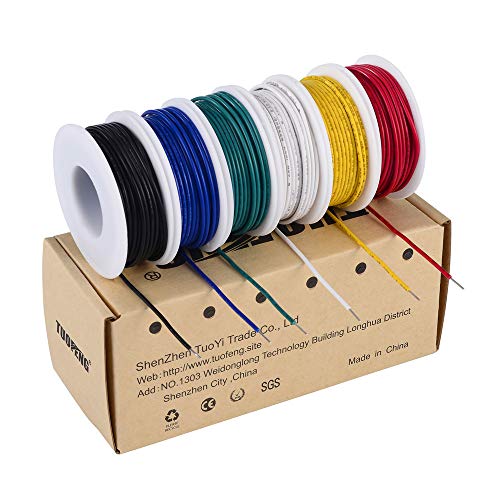
When you’re diving into electronics projects, the TUOFENG 22 AWG Solid Core Hookup Wires are an excellent choice for hobbyists and beginners alike. With 30 feet of solid tinned copper wire in six vibrant colors, you can easily organize and identify your connections. The PVC insulation is rated for 300 volts and resists abrasion, making it durable for both indoor and outdoor use. These wires are flexible, easy to solder, and handle temperatures up to 80°C, ensuring reliable performance in various applications. Users love the convenience and versatility, although some wish for clearer cutting and stripping guidelines.
Best For: Hobbyists and beginners looking for reliable and versatile wiring solutions for electronics projects.
Pros:
- Flexible and easy to solder, facilitating custom lengths and connections.
- Durable PVC insulation rated for 300 volts, suitable for indoor and outdoor use.
- Available in six vibrant colors for easy organization and identification of wires.
Cons:
- Some users experienced insulation melting during soldering.
- Lack of clear guidelines for cutting and stripping the wires.
- May require additional flux for optimal soldering performance.
63-37 Tin Lead Rosin Core Solder Wire for Electrical Soldering (0.8mm 50g)
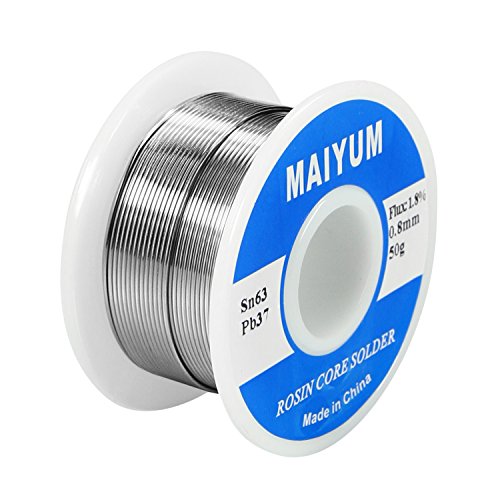
Engineered for hobbyists and DIY enthusiasts, the 63-37 Tin Lead Rosin Core Solder Wire is your go-to solution for achieving perfect connections in various electrical projects. With a diameter of 0.8mm and a weight of 50g, it’s compact and easy to store. The 1.8% flux content enhances flow, ensuring strong solder joints while preventing oxidation. This solder melts at 361°F (183°C), making it ideal for circuit boards, cable repairs, and more. Highly rated by users for its effectiveness and affordability, it’s perfect for both precise applications and general repairs. Just remember, it contains lead, so handle with care.
Best For: Hobbyists, DIY enthusiasts, and anyone needing reliable soldering for electronic projects.
Pros:
- Easy to use with smooth flow for strong solder joints.
- Compact size makes it convenient for storage and portability.
- Affordable option with high customer satisfaction and effectiveness for various applications.
Cons:
- Contains lead, posing potential health risks if not handled properly.
- May not be suitable for professional-grade projects requiring higher quality solder.
- Limited flux content might require additional flux for certain applications.
TOWOT High Purity Tin Lead Rosin Core Solder Wire (1.0mm, 50g)

For hobbyists and DIY enthusiasts seeking reliable connections, the TOWOT High Purity Tin Lead Rosin Core Solder Wire (1.0mm, 50g) stands out with its low melting point and smooth flow. Composed of 63% tin and 37% lead, it guarantees strong solder joints ideal for circuit boards, radios, and various repairs. Users appreciate its fast soldering speed and easy melting, leading to shiny, secure connections without cold solder issues. With a 4.6-star rating from over 4,100 reviews, it’s a top choice for small projects. Plus, competitive pricing and a 30-day return guarantee make it a risk-free investment for your toolkit.
Best For: Hobbyists and DIY enthusiasts looking for a reliable soldering solution for small projects and repairs.
Pros:
- High purity composition ensures strong and durable solder joints.
- Low melting point and smooth flow make for fast and easy soldering.
- Highly rated by users for effective performance compared to cheaper alternatives.
Cons:
- Contains lead, which may not be suitable for all users or projects.
- Limited to a specific diameter (1.0mm), which may not fit all applications.
- Only available in a 50g package, which may not be sufficient for larger projects.
Factors to Consider When Choosing Solder Wires
When you’re choosing solder wires, there are several key factors to keep in mind. Consider the wire composition and ratio, as these can greatly affect your connections. You’ll also want to pay attention to the diameter, melting point, flux content, and whether the solder is suitable for your specific application.
Wire Composition and Ratio
Choosing the right solder wire composition and ratio is essential for achieving strong, reliable connections in your projects. Most solder wires are a blend of tin and lead, with common ratios being 63/37 or 60/40. A higher tin content generally means better corrosion resistance and a lower melting point, making it perfect for electronic applications. For instance, 63/37 solder melts at about 361°F (183°C), ideal for sensitive components that need careful temperature management. Additionally, make certain your solder wire has around 1.8% flux to prevent oxidation during soldering, which guarantees strong, clean joints. Ultimately, the composition you choose will impact your soldering ease, flow characteristics, and joint strength, so pick wisely for the best results.
Diameter and Weight
Selecting the right diameter and weight of solder wire plays an essential role in achieving effective solder joints. The diameter typically ranges from 0.3mm to 1.0mm. If you’re working on intricate tasks like PCB assembly, opt for smaller diameters, which offer better control. On the other hand, thicker wires are ideal for general repairs, providing faster coverage for larger joints. Weight matters too, as it affects portability and the amount available for projects. Common weights range from 27g to 450g; lighter spools are convenient for smaller tasks, while heavier ones suit larger jobs. Ultimately, choosing the right diameter and weight will help you create superior solder joints while minimizing the risk of overheating components.
Melting Point Considerations
Understanding the melting point of solder wires is essential for achieving reliable connections, as it dictates the temperature at which the solder flows and bonds effectively. Common melting points for tin-lead solders range from 361°F (183°C) to 370°F (188°C). If you’re working with delicate electronic components, opting for a low melting point solder can make your job faster and easier, minimizing heat exposure. On the other hand, higher melting point solders are ideal for applications needing stronger joints or components that endure elevated temperatures. Remember, the melting point also influences flow characteristics—lower temperatures typically yield smoother flow and better wetting. Always match the solder’s melting point to your specific application for peak performance and reliability.
Flux Content Importance
While the solder wire’s flux content might seem like a minor detail, it greatly impacts the quality of your connections. The flux content enhances solder flow and prevents oxidation, ensuring strong and reliable joints. For rosin core solder wires, a typical flux content is around 1.8%. This level is vital for cleaning metal surfaces and improving wetting properties. If you opt for solder with higher flux content, you’ll benefit from better soldering capabilities, especially when working with intricate electronic components. Insufficient flux can lead to poor adhesion and increase the risk of defects like solder splatter and weak connections. Choosing solder wires with appropriate flux levels is essential for achieving peak performance and durability in your electrical connections.
Application Suitability
When choosing solder wires, it’s vital to take into account factors like composition, diameter, and melting point to guarantee you’re using the right type for your specific application. For example, a 60/40 or 63/37 tin-lead ratio can greatly impact your results; the latter has a lower melting point and flows better for electrical soldering. The diameter also matters—thinner wires (0.3mm) are perfect for delicate PCB work, while thicker wires (1.0mm) suit larger joints. Additionally, using rosin core solder is preferable for electronics, as it cleans surfaces and reduces oxidation. Finally, understanding the melting point is significant; lower temperatures (around 361°F or 183°C) help protect sensitive components from heat damage during soldering.
Performance Features
Choosing the right solder wire involves considering several performance features that directly impact your soldering outcomes. First, pay attention to the melting point; lower temperatures, like 361°F (183°C), let you solder quickly while minimizing heat damage to sensitive components. Next, consider the diameter; wires between 0.3mm and 1.0mm offer varying precision, with thinner options ideal for delicate work. The flux content, typically around 1.8%, improves flow and adhesion, preventing oxidation during soldering. Additionally, opt for high-quality wires for smooth melting and quick solidification, ensuring robust solder joints. Finally, check performance ratings—user feedback with scores above 4.5 out of 5 stars can signal a reliable choice for your projects.
Safety and Regulations
Soldering successfully requires not just attention to performance features but also awareness of safety and regulations surrounding solder wires. If you’re using lead-based solder, be mindful of health risks like birth defects and reproductive harm, as outlined in California’s Proposition 65. Always work in well-ventilated areas to reduce inhalation of potentially harmful fumes, especially those from rosin core flux. Consult safety data sheets (SDS) for information on hazards, handling precautions, and first aid measures. Consider the melting point of solder wires too; lower melting points can damage sensitive components if not handled carefully. Finally, don’t forget to wear personal protective equipment (PPE), like gloves and safety glasses, to protect yourself from exposure to hazardous materials.
Packaging and Storage
Selecting the right packaging for solder wire is essential for ensuring ideal performance during your projects. Proper packaging protects the wire from moisture and oxidation, which can negatively impact soldering quality. Look for solder wires that come in convenient spools or reels, as these allow for easy handling and dispensing. Consider the dimensions and weight of the packaging; compact sizes are preferable for portability and organization. Some solder wires even feature dispensers that make access easy and help prevent tangling or damage during storage. To prolong the shelf life of your solder wire, store it in a cool, dry place. This helps maintain its quality over time, ensuring you get the best results every time you solder.


