

If you’re exploring top-tier PLC controllers trusted by automation engineers, consider the PLC HMI Integrated models with touch screens, such as the compact 2.8-inch and advanced 3.8-inch versions.
The DC 24V FX1S-20MT provides dependable output configurations, while the PWM to Voltage module ensures effective control.
Additionally, resources like PLC Controls with Ladder Diagram and Structured Text programming guides are invaluable for enhancing your automation projects.
Dive into the world of technology, where automation, robotics, and AI advancements come together to elevate your endeavors!
PLC HMI Integrated Programmable Logic Controller with Touch Screen

When exploring reliable automation solutions, the PLC HMI Integrated Programmable Logic Controller with a touch screen emerges as an excellent choice for engineers. This compact all-in-one unit boasts a 2.8-inch TFT LCD display, ensuring ease of use. With 7 inputs and multiple outputs, including 5 relay and 4 transistor outputs, it offers versatility across various applications. Its capability to control servos and steppers enhances its functionality, making it suitable for diverse tasks. Additionally, it is compatible with FX1S and supports robust programming through GX Works and YKBuilder software. Installation is straightforward, requiring only a USB cable for connection.
Best For: Engineers and automation professionals looking for a compact and intuitive PLC solution with touch screen capabilities.
Pros:
- All-in-one design simplifies installation and conserves space.
- Versatile output options facilitate efficient control of servos and stepper motors.
- User-friendly interface with a touch screen improves usability for operators.
Cons:
- The limited display size may hinder visibility for complex programming or monitoring tasks.
- Software support is primarily in Chinese, which could be a challenge for non-Chinese speakers.
- USB driver installation is necessary, which might be a hurdle for less tech-savvy users.
3.8 Inch PLC HMI Integrated Programmable Logic Controller

The 3.8 Inch PLC HMI Integrated Programmable Logic Controller is an excellent choice for automation engineers seeking compact and versatile solutions in the fields of automation, robotics, and AI advancements. Designed for seamless integration with FX1S, this model allows for efficient incorporation into various projects. It boasts 10 NPN transistor inputs, 7 relay outputs, and 4 additional outputs, including high-speed options for precise control. The inclusion of built-in analog inputs and temperature probes enhances its functionality, making it suitable for a wide range of applications. It supports popular PLC software like GX Works 2 and HMI software YKBuilder V5.3. With simple USB connectivity, programming becomes straightforward, enabling you to maximize your automation tasks effectively.
Best For: Automation engineers and tech enthusiasts looking for a compact and versatile integrated PLC and HMI solution for their projects.
Pros:
- Seamless Compatibility: Fully compatible with FX1S for effortless integration.
- High-Speed Control: Equipped with high-speed pulse outputs for accurate encoder management.
- Built-in Functionality: Features analog inputs and temperature probes for diverse applications.
Cons:
- Limited Output Types: Only supports NPN transistor inputs, which may not be suitable for all applications.
- Software Language Barrier: The programming software is primarily available in Chinese, which could be a challenge for non-Chinese speakers.
- Basic Connectivity: Requires a specific mini port to USB cable for programming, which may not be easily accessible.
PLC Controls with Ladder Diagram (IEC 61131-3)

PLC Controls with Ladder Diagram (IEC 61131-3) offer essential insights for automation engineers seeking to enhance their PLC programming skills. This book, published by Books on Demand, spans 226 pages and explores Ladder Diagram techniques in accordance with the IEC 61131-3 standard. Whether you’re a student or a seasoned professional, you’ll find valuable information to improve your expertise in automation and control systems. The structured approach simplifies complex concepts, making it an indispensable resource for anyone eager to excel in PLC programming. Prepare to elevate your knowledge and confidence in this dynamic field!
Best For: Individuals interested in mastering PLC programming, including students and professionals in automation and control systems.
Pros:
- Comprehensive Coverage: In-depth insights into Ladder Diagram techniques aligned with IEC 61131-3 standards.
- Structured Learning: A tailored approach that simplifies complex concepts for easier understanding.
- Diverse Audience: Suitable for both beginners and experienced professionals in the field.
Cons:
- Limited Advanced Content: May not extensively cover advanced topics for seasoned experts.
- Paperback Format: Some readers may prefer digital formats for easier access and portability.
- Publication Date: Published in 2021, it may not reflect the latest developments in PLC technology.
Explore more about automation, robotics, and AI advancements to stay at the forefront of technology trends!
DC 24V FX1S-20MT Programmable Logic Controller

Engineers seeking an efficient and compact solution will find the DC 24V FX1S-20MT Programmable Logic Controller an excellent choice. This versatile PLC features 10 inputs and 10 relay outputs, supporting NPN type configurations, along with two high-speed pulse outputs ideal for controlling servo or stepper motors. Communication is streamlined through a single RS485 channel, ensuring compatibility with a range of systems. Programming is straightforward using GX Works 2 or Developer, and you can easily download your programs via a Type C-USB cable—just remember to install the USB driver beforehand. With its compact design, this PLC is a reliable option for various automation needs.
Best For: Engineers and automation professionals seeking a compact and efficient programmable logic controller for small to medium applications.
Pros:
- Versatile Inputs/Outputs: Offers 10 inputs and 10 relay outputs, making it suitable for a wide array of automation tasks.
- High-Speed Pulse Outputs: Capable of supporting 100KHz for servo or stepper motor control, enhancing performance in motion applications.
- Ease of Programming: Compatible with widely used software like GX Works 2, simplifying the programming process.
Cons:
- Limited Communication Channels: The single RS485 channel may restrict connectivity in more complex systems.
- Driver Installation Required: Users must install the USB driver before programming, which could be an inconvenience.
- Generic Brand: As a generic product, it may not offer the brand support and reliability associated with well-known manufacturers.
This PLC is a great step in the evolving landscape of automation technology, perfect for those looking to integrate advanced control solutions into their projects.
PWM to Voltage Module 0-10V for Industrial Control
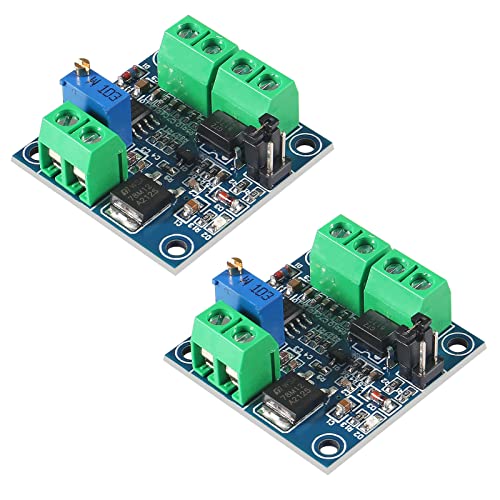
For professionals in automation, robotics, and AI, the PWM to Voltage Module 0-10V is an essential tool, expertly converting a 0-100% PWM digital signal into a stable 0-10V analog output. This compact module, model 3.3P-5V from AOICRIE, operates within a working voltage of 15-30V DC and requires over 100mA of power. With a PWM frequency range of 100Hz to 3kHz, it seamlessly interfaces with PLCs and microcontrollers. Its integrated microcontroller technology allows for intuitive adjustments via a fine-tuning potentiometer, making it highly effective for industrial control applications.
Best For: Engineers and automation professionals looking for a dependable solution to convert PWM signals to analog voltage across various technology sectors.
Pros:
- Compact design enables flexible integration into diverse setups.
- User-friendly fine-tuning potentiometer simplifies adjustments.
- Broad compatibility with PLCs and microcontrollers enhances versatility.
Cons:
- Limited PWM frequency range may not meet the needs of all applications.
- Power supply requirement of over 100mA might require additional design considerations.
- Operating voltage range of 15-30V DC could restrict its use in low-voltage environments.
PLC & Industrial Controls Interview Preparation Guide

If you’re preparing for a job in technology, particularly in automation, robotics, or AI advancements, the “PLC & Industrial Controls Interview Preparation Guide” is an invaluable resource. This Kindle eBook, published by Hutchgenix Group LLC, spans 292 pages and covers essential topics like PLCs, ladder logic programming, and troubleshooting techniques. It’s designed to enhance your interview skills while equipping you with practical knowledge relevant to real-world applications in various tech sectors. Targeted at aspiring professionals in automation, manufacturing, and related fields, this guide helps you understand PLC systems and prepares you for the challenges you’ll face in the tech landscape. Don’t miss out on this essential tool for your career!
Best For: Individuals seeking careers in technology, particularly in automation, robotics, and AI, as well as job seekers in the manufacturing sector.
Pros:
- Comprehensive Coverage: Provides in-depth knowledge on PLCs, ladder logic programming, and troubleshooting techniques.
- Practical Focus: Equips candidates with real-world applications and skills needed across multiple tech fields.
- Interview Preparation: Sharpens interview skills specifically tailored to the technology job market.
Cons:
- Digital Format Only: Available exclusively as a Kindle eBook, which may not suit those who prefer physical books.
- Future Publication Date: Scheduled for release in May 2026, limiting immediate access for prospective readers.
- Niche Subject Matter: Primarily focused on industrial controls, which may not appeal to a broader audience outside this specific area.
PLC Controls with Structured Text (ST) Programming

Structured Text (ST) programming is crucial for automation engineers looking to achieve efficiency and flexibility in PLC controls. As part of the IEC 61131-3 standard, ST enables the development of complex algorithms with ease. This structured method not only simplifies your code but also enhances readability and maintainability. If you aim to elevate your programming skills, check out the book “PLC Controls with Structured Text (ST), V3,” published by Books on Demand. With 210 pages filled with best practices and insights, it serves as an excellent resource for mastering ST programming. Leverage this tool to optimize your automation projects and increase productivity.
Best For: Automation engineers and programmers aiming to refine their skills in PLC controls using Structured Text (ST), as well as those interested in the broader context of technology, including automation, robotics, and AI advancements.
Pros:
- Comprehensive Resource: Offers best practices and insights for effective ST programming.
- Standard Compliance: Adheres to the IEC 61131-3 standard, ensuring applicability in various industrial contexts.
- User-Friendly: Simplifies complex algorithms, leading to more readable and maintainable code.
Cons:
- Limited to ST: Focuses exclusively on Structured Text, which may not appeal to those exploring other programming languages.
- Paperback Format: May lack the convenience of digital formats for some users.
- Specific Audience: Primarily aimed at professionals, which may not be suitable for beginners without prior knowledge.
Factors to Consider When Choosing PLC Controllers
When selecting a PLC controller, several crucial factors warrant your attention. Evaluate the input/output configuration, programming flexibility, and display features to ensure it aligns with your specific project requirements. Additionally, consider compatibility with industry standards and the communication protocols it supports, as these elements are vital for seamless integration within broader automation and robotics systems. Don’t overlook how advancements in AI can enhance the capabilities of your PLC, making it a smarter choice for modern technological applications.
Input/Output Configuration
Selecting the appropriate input/output (I/O) configuration for your PLC controller is crucial, as it influences the number of devices, sensors, and actuators you can connect within your automation and robotics systems. Consider the types of I/O you’ll require: digital inputs are ideal for on/off signals, while analog inputs allow for the measurement of variable signals like temperature or pressure, enhancing the versatility of your technology solutions. For applications needing precise timing, high-speed inputs are essential for tasks such as encoder control. Additionally, pay attention to the number of relay and transistor outputs; relays are suited for higher power applications, whereas transistors are better for rapid switching needs. Lastly, ensure compatibility with your existing systems to facilitate seamless integration with specific sensors or actuators in your automation projects, keeping in mind the broader context of AI advancements and technological integration.
2. Programming Flexibility
When assessing PLC controllers, programming flexibility plays a crucial role in your automation and robotics projects. Seek controllers that support a variety of programming languages, such as Ladder Diagram, Structured Text, and Function Block Diagram. This diversity allows you to select the most suitable approach for your specific application. Additionally, compatibility with software that embraces different programming paradigms enhances user experience and facilitates integration with existing systems. It’s advantageous to offer both graphical and textual programming options to accommodate team members with varying skill sets. Advanced features like function libraries and modular programming not only streamline complex applications but also promote code reusability. Moreover, robust debugging tools and simulation capabilities enable effective testing and refinement of control logic prior to deployment, ensuring a smoother implementation process across your technology initiatives, including AI advancements and automation solutions.
3. Display Features
Display Features in PLC Controllers
The effectiveness of a PLC controller’s display features is influenced by several factors, which can significantly enhance the user experience in various technological applications such as automation, robotics, and AI advancements.
Display Size
The size of the display, whether 2.8 inches or 3.8 inches, plays a crucial role in visibility, particularly in complex environments. Larger screens can facilitate clearer viewing of critical information.
Touchscreen Functionality
Incorporating touchscreen functionality adds an intuitive layer to the interface, making navigation easier compared to traditional button controls. This is especially beneficial in fast-paced settings where quick adjustments are essential.
Display Resolution and Technology
The choice of display resolution and technology is vital—TFT LCDs, for instance, are known for offering superior clarity and readability across various lighting conditions, which is crucial for monitoring systems in diverse environments.
Graphical Interface Capabilities
Advanced graphical interfaces can visually represent processes, enabling real-time monitoring and adjustments. This visualization is particularly useful in automation and robotics, where precise control is necessary.
Multi-Color Displays
Multi-color displays enhance information differentiation, allowing users to quickly identify alerts, statuses, and operational parameters. This feature streamlines decision-making processes in dynamic applications.
Selecting the right display features can significantly improve the efficiency and ease of automation tasks, making them smoother and more effective across various technological domains.
4. Compatibility With Standards
When evaluating PLC controllers for automation and robotics applications, compatibility with industry standards is crucial for seamless integration into your existing systems. Look for controllers that adhere to IEC 61131-3, as this standard simplifies programming with familiar languages like Ladder Diagram and Structured Text. Choosing a PLC that supports multiple programming methodologies enhances your flexibility in system design, accommodating various operational practices across different technologies, including AI advancements. High compatibility with diverse input/output configurations facilitates the integration of sensors and actuators, reducing installation complexity. Moreover, ensuring compatibility with legacy systems can significantly lower upgrade costs and minimize downtime during implementation. This smooth transition to newer technology is vital for maintaining operational efficiency and maximizing your investment in automation and robotics.
5. Communication Protocols
Communication Protocols
Selecting the appropriate communication protocol is crucial for ensuring efficient data exchange not only between your PLC controllers and other devices in automation systems but also across various technological domains such as robotics and AI. Common protocols like RS-232, RS-485, Modbus, and Ethernet/IP each present distinct advantages in terms of speed and distance. Your decision can significantly influence system scalability; some protocols accommodate more devices and cover greater distances than others.
In the context of automation and beyond, it’s vital to consider error detection and correction mechanisms, as these ensure reliable data transmission—an essential factor for safe and effective industrial operations. Furthermore, understanding bandwidth and latency characteristics is imperative, particularly for applications requiring real-time data responses, such as in high-speed manufacturing or robotics environments. Ultimately, choosing the right protocol will enhance your system’s performance, compatibility, and integration across various technological landscapes.
6. Software Support Availability
Ensuring Your PLC Controller Meets Your Needs
To guarantee your PLC controller aligns with your requirements, start by confirming its compatibility with widely-used programming software like GX Works 2. This support not only simplifies the user experience but also connects you to a larger community for assistance. Look for options that accommodate various programming languages, such as Ladder Diagram (LD) and Structured Text (ST), offering you flexibility based on your preferences.
It’s also important to check for the availability of both English and localized software versions to ensure accessibility for your entire team. Comprehensive documentation and tutorials can significantly enhance troubleshooting and programming skills, making the learning curve smoother.
Lastly, verify that the manufacturer provides regular software updates and robust technical support. This commitment to ongoing improvements and bug fixes will help ensure your system remains reliable and efficient while keeping pace with advancements in automation, robotics, and AI technologies.
7. Operating Voltage Range
Evaluating software support is just one aspect of selecting the right PLC controller; understanding the operating voltage range is equally crucial in the broader context of technology, including automation and robotics. The operating voltage range dictates compatibility with your existing electrical systems, typically ranging from 24V DC to higher voltages like 120V or 240V AC. A wider voltage range offers flexibility for various industrial applications, reducing the need for additional power converters.
It’s essential to ensure that the voltage ratings match your connected devices, such as sensors and actuators, to prevent damage and ensure optimal performance. Operating within the specified range enhances reliability and longevity, minimizing risks like overheating and electrical failures. Additionally, consider external factors, such as voltage fluctuations, which may necessitate protective measures like surge suppressors to safeguard your automation systems. This attention to detail supports the seamless integration of advanced technologies like AI and robotics in your operations.
8. Size and Form Factor
When selecting a PLC controller, size and form factor are crucial considerations for your installation strategy, particularly in confined industrial environments. Smaller PLCs facilitate easier integration into existing systems, making them ideal for retrofitting older machinery. The form factor often influences the number of I/O ports available; typically, larger units can accommodate more inputs and outputs, which is vital for complex automation applications. Additionally, it’s essential to consider the controller’s dimensions for effective heat dissipation and ventilation, as these factors significantly affect performance and longevity. For those requiring mobility, compact models are well-suited for temporary setups across diverse industrial settings. Make informed choices to ensure optimal functionality and efficiency in your automation and robotics projects.


