

For seamless connectivity and innovation in 2025, you’ve got some fantastic NFC modules to choose from. The HiLetgo PN532 NFC RFID Module V3 Kit is unbeatable for Arduino and Raspberry Pi compatibility. If you need multiple units, the 10-pack version offers great value. Don’t overlook the AITRIP version with S50 card for added versatility. Also, consider the NTAG215 NFC cards for reliable storage. Stick around to discover more about the best options available!
HiLetgo PN532 NFC RFID Module V3 Kit for Arduino and Raspberry Pi

The HiLetgo PN532 NFC RFID Module V3 Kit is an excellent choice for DIY enthusiasts working with Arduino and Raspberry Pi projects. It supports various connection modes—I2C, SPI, and HSU—allowing you flexibility in your setup. While some users encounter challenges with I2C connections, SPI mode often proves more reliable. This module supports multiple RFID cards, including Mifare, making it versatile for different applications. However, be prepared for some troubleshooting; users have reported intermittent functionality and wiring issues. Overall, with careful setup and experimentation, you’ll find the PN532 module a valuable asset in your NFC projects.
Best For: DIY enthusiasts and hobbyists looking to explore NFC technology with Arduino and Raspberry Pi.
Pros:
- Versatile connectivity: Supports I2C, SPI, and HSU modes for flexible integration in various projects.
- Wide compatibility: Works with multiple RFID card types, including Mifare, making it suitable for diverse applications.
- User-friendly for experimentation: Encourages learning and exploration of 13.56 MHz RFID technology, ideal for hands-on projects.
Cons:
- Intermittent functionality: Users have reported issues with stable connections, particularly in I2C mode.
- Documentation limitations: Lack of comprehensive guides can complicate setup and troubleshooting.
- Wiring challenges: Some users experienced difficulties with connections, requiring additional testing and adjustments.
PN532 NFC RFID Module V3 Kit (10 Packs)

If you’re diving into NFC technology for your next DIY project, the PN532 NFC RFID Module V3 Kit (10 Packs) is an excellent choice. This kit offers versatile functionality, supporting NFC RFID reading and writing, along with peer-to-peer communication. It’s compatible with platforms like Arduino and Raspberry Pi, making integration a breeze. With multiple interface options—I2C, SPI, and HSU—you can easily switch modes. Plus, its compact size allows for seamless embedding in your projects. Whether you’re working with Mifare cards or Innovision Jewel cards, this kit has you covered, ensuring you stay ahead in NFC innovation.
Best For: Hobbyists and developers looking to explore NFC technology in Arduino and Raspberry Pi projects.
Pros:
- Versatile functionality supporting NFC RFID reading, writing, and peer-to-peer communication.
- Multiple interface options (I2C, SPI, HSU) for easy integration in various projects.
- Compact size allows for seamless embedding in DIY applications.
Cons:
- May require additional libraries or coding knowledge for optimal use.
- Limited range for NFC communication compared to other wireless technologies.
- Compatibility may vary with certain card types or smartphones.
100pcs NTAG215 NFC Cards, Programmable NFC Tags
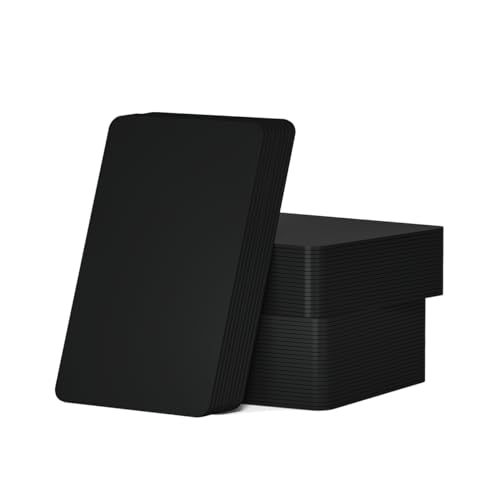
For tech enthusiasts and businesses looking to streamline their processes, the 100pcs NTAG215 NFC Cards are an excellent choice. These programmable NFC tags, the size of credit cards, are made from durable, waterproof PVC, ensuring they withstand daily wear. With 504 bytes of memory, they allow for password-protected authentication and a high scan strength. You can easily share messages, connect to WiFi, or distribute business cards by using NFC-enabled devices. Plus, you can rewrite them for different data, making them versatile. Just remember, they’re not suitable for metal surfaces and can only be set to read-only once programmed.
Best For: Tech enthusiasts and businesses looking to enhance their branding and communication through NFC technology.
Pros:
- Durable and waterproof PVC material ensures longevity and resistance to wear and tear.
- High scan strength and password-protected authentication enhance security and reliability.
- Versatile applications allow for easy sharing of various types of information, including URLs, business cards, and WiFi connections.
Cons:
- Not suitable for use on metal surfaces, which may limit some applications.
- Once set to read-only, the data cannot be rewritten, reducing flexibility in usage.
- Requires NFC-enabled devices and appropriate tools for programming, which may not be accessible to all users.
HiLetgo PN532 NFC RFID Module V3 Kit for Arduino and Raspberry Pi
Perfect for hobbyists and developers alike, the HiLetgo PN532 NFC RFID Module V3 Kit offers seamless compatibility with both Arduino and Raspberry Pi. This module supports NFC RFID reading/writing and P2P communication through I2C, SPI, and HSU modes. While many users find SPI mode reliable, some struggle with I2C connections. You might encounter issues with inconsistent readings or connectivity, especially if the board enters sleep mode. For the best experience, focus on proper wiring and consider using newer Raspberry Pi models. Despite initial hurdles, you can successfully utilize this module for exciting NFC projects with some troubleshooting and experimentation.
Best For: Hobbyists and developers looking to explore NFC technology with Arduino and Raspberry Pi.
Pros:
- Compatible with multiple connection modes: I2C, SPI, and HSU.
- Supports a variety of RFID cards, enhancing project versatility.
- Many users report successful implementation after troubleshooting and adjustments.
Cons:
- I2C mode can be unreliable, causing connectivity issues.
- Users have experienced inconsistent readings and performance variability.
- Lack of comprehensive documentation may lead to confusion during setup.
AITRIP PN532 NFC RFID Module V3 Kit with S50 White Card

The AITRIP PN532 NFC RFID Module V3 Kit with S50 White Card stands out as an excellent choice for hobbyists and developers seeking a versatile NFC solution. This kit supports various communication modes, including I2C, SPI, and HSU, making it compatible with Arduino, Raspberry Pi, and Android devices. You’ll appreciate its compact size, perfect for embedding in DIY projects. With support for Mifare cards and a reliable 4.9-star rating from customers, it’s clear this module excels in performance. Plus, enjoy peace of mind with a 30-day return policy, ensuring you’re satisfied with your purchase.
Best For: Hobbyists and developers looking for a versatile NFC solution compatible with various platforms.
Pros:
- Supports multiple communication modes (I2C, SPI, HSU) for versatile integration with different devices.
- Compact size makes it easy to embed in DIY projects without taking up much space.
- High customer satisfaction with a 4.9-star rating, indicating reliable performance and quality.
Cons:
- Limited to specific card types (Mifare 1k, 4k, Ultralight, DesFire) which may not suit all applications.
- May require additional components for some setups, depending on the project requirements.
- 30-day return policy may not be enough for all users to fully test the product in their applications.
10pcs PN532 NFC RFID Module V3 Kit for Arduino and Raspberry Pi

Looking to enhance your projects with NFC capabilities? The 10pcs PN532 NFC RFID Module V3 Kit is perfect for Arduino and Raspberry Pi enthusiasts. This kit supports NFC RFID reading/writing and P2P communication, making it versatile for various applications. With communication modes like I2C, SPI, and HSU, you’ll find it easy to integrate. It’s compatible with multiple RFID standards, including Mifare and ISO/IEC cards. Plus, you’ll receive an S50 White Card Key Card. Rated 5.0 out of 5 stars, this kit is a top choice for seamless connectivity. Enjoy a full refund within 30 days if you’re not satisfied!
Best For: This product is best for hobbyists and developers looking to implement NFC capabilities in their Arduino and Raspberry Pi projects.
Pros:
- Versatile Communication: Supports multiple communication modes (I2C, SPI, HSU), making it easy to integrate into various projects.
- Wide Compatibility: Works with a range of RFID standards, including Mifare and ISO/IEC cards, providing flexibility for different applications.
- High Customer Satisfaction: Rated 5.0 out of 5 stars, indicating strong positive feedback from users.
Cons:
- Limited Quantity: The kit contains 10 pieces, which may be more than needed for smaller projects.
- Learning Curve: Users unfamiliar with NFC technology may face a learning curve when integrating the modules.
- Return Policy Fees: There is a 15% fee for returns due to misrepresentation, which could impact customers if the product doesn’t meet their expectations.
HiLetgo NFC Reader PN532 Module Kit for Arduino and Raspberry Pi

For hobbyists and developers seeking a reliable NFC solution, the HiLetgo NFC Reader PN532 Module Kit stands out with its versatile communication interfaces, including SPI, IIC, and UART. Operating at 3.3V, this module is perfect for both Arduino and Raspberry Pi projects. You’ll appreciate its efficient performance, with a maximum current of 150mA and a user-friendly design that includes Mifare tags. While some users faced minor I2C issues, these can be easily resolved by adjusting the power supply and bus speed. Overall, it’s a dependable choice for various applications, offering an authentic NFC experience without the pitfalls of cheaper alternatives.
Best For: Hobbyists and developers looking for a reliable NFC solution for their Arduino and Raspberry Pi projects.
Pros:
- Versatile communication interfaces (SPI, IIC, UART) cater to various project needs.
- Reliable performance compared to cheaper alternatives, ensuring a dependable NFC experience.
- Includes Mifare tags for more complex reading/writing applications.
Cons:
- Minor I2C issues may arise, requiring adjustments to power supply and bus speed.
- Operating voltage limited to 3.3V, which may not suit all projects.
- Higher price compared to non-authentic copies, which may deter budget-conscious users.
Factors to Consider When Choosing Nfc Modules
When choosing NFC modules, you need to think about several key factors. Consider compatibility with your platforms, the available communication modes, and the range and performance you require. Ease of integration and supported NFC standards also play an essential role in ensuring your project’s success.
Compatibility With Platforms
Choosing an NFC module that’s compatible with your platform is vital for guaranteeing smooth integration into your projects. Make certain it works with popular platforms like Arduino or Raspberry Pi to avoid headaches during setup. Check the supported communication modes, such as I2C, SPI, or HSU, to confirm they align with your application needs. It’s also important to verify compatibility with specific NFC standards and tags, like Mifare or NTAG, to prevent issues later on. Look for modules that include level shifters for voltage compatibility, especially since some platforms may operate at different voltage levels. Additionally, consider user feedback on compatibility and performance to gauge reliability and ease of use throughout your development process.
Communication Modes Available
While evaluating NFC modules, it’s crucial to take into account the available communication modes, as they directly influence your project’s flexibility and performance. Most NFC modules support I2C, SPI, and HSU (High-Speed UART) modes, each offering unique advantages. I2C often requires extra connections to RST0 and IRQ pins, which can complicate your setup. On the other hand, SPI is generally more reliable, allowing customizable pin usage and faster data transfer rates. If your application demands quick data exchanges, HSU mode might be the best choice. Always consider compatibility with your specific platform and project requirements, as some modes may have limitations or necessitate additional configuration, impacting your overall project efficiency.
Range and Performance
Understanding the range and performance of NFC modules is essential for maximizing their effectiveness in your projects. Typically, these modules function best within a 4-centimeter range, with an effective limit of up to 10 centimeters. However, obstacles like metal surfaces or electronic interference can hinder performance, reducing the read range. Your choice of communication mode, such as I2C or SPI, considerably affects data transmission speed and reliability, with SPI usually offering superior speeds. Additionally, consider modules supporting various card types like Mifare and ISO/IEC 14443-4 for versatility, although they may complicate protocol handling. Finally, guarantee stable power supply for peak performance, especially with modules relying on I2C mode, to maintain connection stability.
Ease of Integration
When selecting NFC modules, ease of integration plays a essential role in ensuring your project runs smoothly. Look for modules that support multiple communication interfaces like I2C, SPI, and UART, giving you flexibility with platforms such as Arduino and Raspberry Pi. It’s important to choose a module with a level shifter for compatibility with various voltage levels, simplifying connections and protecting your components. Opt for those that come with thorough documentation and user guides to ease setup and troubleshooting. Reliability matters, too; select modules with proven performance and positive user experiences across applications. Finally, evaluate the size and form factor to make sure the module fits seamlessly into your project without compromising design or space.
Supported NFC Standards
Selecting the right NFC module involves more than just ease of integration; supported NFC standards are equally important. You’ll want to verify your chosen module supports various standards like ISO/IEC 14443-4, which is vital for compatibility with a wide range of NFC cards and devices. Look for modules that can read and write multiple types of RFID cards, such as Mifare 1k, 4k, Ultralight, and DesFire, as this versatility can enhance your application’s functionality. Additionally, consider modules that support peer-to-peer (P2P) communication for seamless data exchange between NFC-enabled devices. Always verify the supported NFC protocols to confirm they align with your intended use cases and devices, as this will impact overall performance and compatibility.
Power Supply Requirements
Power supply requirements play an essential role in the performance of NFC modules. Typically, you’ll find that these modules require a voltage range of 3.3V to 5.5V, guaranteeing compatibility with various microcontroller platforms. Keep in mind that the maximum supply current can reach up to 150mA, which is critical for stable operation during active reading and writing processes. You should also consider the working current consumption, as it varies between standby mode (around 100mA) and active modes (120mA for read/write). This variation impacts battery life in portable applications. Some modules may struggle with low-current sources, so using external power sources is advisable for reliable operation. Always verify your power supply meets the module’s specifications to avoid malfunctions.


