

When searching for the best linear encoders, you’ll encounter a range of options suitable for various technological applications.
The Digital Readout DRO Display and the GHS38-06 Optical Encoder stand out for their exceptional accuracy and reliability, making them ideal for precision engineering.
If you’re tackling longer measurements, the CALT Incremental Encoder provides excellent performance, while the BONKZEBU Stroke Sensor is perfect for versatile automation projects.
Additionally, encoder strips designed for Roland printers ensure precise movement in creative applications.
Each encoder offers unique features tailored to diverse needs, so take the time to explore how they can elevate your automation, robotics, or AI-driven projects.
Digital Readout 2/3 Axis DRO Display with Encoder

If you’re aiming to elevate precision in your machining tasks, the Digital Readout 2/3 Axis DRO Display with Encoder is a standout choice for metalworking professionals. This CHAWED model boasts a travel length of 220mm (8 inches) and achieves an impressive resolution of 5um, ensuring accuracy within ±5um at 20°C. It’s designed for various applications, including lathes and surface grinders, significantly enhancing your efficiency. The dependable optical grating linear transducer and high-definition LED display streamline operation. Additionally, with lifetime technical support and essential components like a dust cover and mounting plate included, you’re equipped for smooth, precise machining.
Best For: Metalworking professionals seeking improved precision and efficiency in machining tasks.
Pros:
- Exceptional resolution of 5um allows for high accuracy in measurements.
- Versatile compatibility with a range of machine tools.
- Lifetime technical support and essential installation components included.
Cons:
- A travel length of 220mm may not accommodate larger machining applications.
- Careful installation and calibration are necessary for optimal performance.
- Optical components can be sensitive to dust and environmental conditions.
This DRO display exemplifies how advancements in technology, such as automation and precision measurement, are central to enhancing productivity and accuracy in various industrial applications.
Encoder Strip & Linear Encoder Board for Roland

The Encoder Strip and Linear Encoder Board for Roland is an essential tool for professionals in the tech world, especially those utilizing Roland printers like the RE-640 and VS-540. This 2.6m (102 inches) long encoder strip, with a width of 15mm (0.59 inches), ensures precise printing by maintaining accurate positioning, an important factor in various automation and robotics applications. Customization is straightforward; simply cut it to your desired length and create holes at both ends for installation. Its compatibility with multiple models, including the VS-300 and VS-640i, makes this encoder strip, part number W701987020, a versatile choice for enhancing your printing capabilities. Trust KD-Tec’s design to boost your printing accuracy and efficiency, essential for any tech-driven project.
Best For: Professionals in technology sectors, including automation and robotics, who require high-precision printing solutions.
Pros:
- Customizable Length: Easily cut the encoder strip to meet specific printer requirements.
- Wide Compatibility: Works with various Roland printer models, adding versatility for different tech applications.
- Enhanced Accuracy: Maintains precise positioning, contributing to superior print quality, crucial for tech innovations.
Cons:
- Installation Required: Users must create holes at both ends for proper installation, necessitating additional tools.
- No Pre-Made Holes: Customization may be time-consuming for those less experienced with DIY modifications.
- Brand Unknown: Limited brand recognition might cause hesitation for some potential buyers.
GHS38-06 Optical Linear Encoder with Cable

For precision in reflective optical speed encoding, the GHS38-06 Optical Linear Encoder stands out as a top-tier choice for various technological applications, including automation and robotics. With a resolution of 2500 PPR, this encoder delivers exceptional accuracy, making it ideal for high-precision tasks in engineering and AI advancements. It features an NPN signal output, ensuring reliable performance across diverse setups. Manufactured by KVAZLADKQ, it includes a cable for seamless installation and connectivity, streamlining your workflow. Its compact design enhances versatility for different environments, whether you’re upgrading existing systems or implementing new ones. The GHS38-06 provides the precision required for achieving superior results in your tech projects.
Best For: Engineers and technicians seeking high-precision speed encoding solutions across automation, robotics, and AI applications.
Pros:
- High resolution of 2500 PPR ensures exceptional accuracy for precise measurements.
- NPN signal output guarantees compatibility with a variety of systems.
- Comes with a cable for easy installation and connectivity.
Cons:
- Limited to reflective applications, which may not be suitable for every environment.
- One size may not fit all setups, potentially necessitating additional adjustments.
- Dependence on a specific brand may restrict options for replacements or upgrades.
CALT 1000mm Incremental Encoder Linear Displacement Sensor
Product not found or API error.
Looking for precision in linear measurements? The CALT 1000mm Incremental Encoder Linear Displacement Sensor (CESI-S1000P) is an ideal solution with a measurement range of 0-1000mm and a resolution of 0.1mm per pulse. Its push-pull output and ABZ signal phases ensure accurate data transmission, making it a reliable component for various technology applications, including automation and robotics. With a maximum moving speed of 6 m/s and a force capacity of up to 16kg, it’s designed to meet the demands of dynamic environments. Operating within a voltage range of 5V to 24V DC, this sensor offers versatility across different setups. Additionally, its 1-meter shielded cable output enhances reliability, making this encoder a trusted choice for precision engineering tasks.
Best For: The CALT 1000mm Incremental Encoder Linear Displacement Sensor is perfect for engineers and technicians in the fields of automation, robotics, and other technology sectors seeking precise and reliable linear measurement solutions.
Pros:
- High Resolution: Achieves a resolution of 0.1mm per pulse for highly accurate measurements.
- Versatile Power Supply: Works with a voltage range of 5V to 24V DC, ensuring compatibility with various systems.
- Robust Performance: Capable of handling maximum moving speeds of 6 m/s and a force capacity of 16kg, making it suitable for demanding applications.
Cons:
- Limited Range: The measurement range is confined to 1000mm, which may not be suitable for larger-scale applications.
- Output Type Limitations: Push-pull output might not be compatible with all existing systems.
- Cable Length: The 1-meter shielded cable may require extensions for certain installations, potentially complicating setup.
GHS38-06 Optical Linear Encoder with Cable
If you’re exploring advanced technology solutions, the GHS38-06 Optical Linear Encoder with cable provides outstanding accuracy for motion control applications. With 2500 pulses per revolution, this encoder, manufactured by IAEYBUAOL, ensures precise measurements essential for automation and robotics. Its reliable NPN signal output facilitates seamless data transmission, making it a valuable component in various tech projects. The included cable simplifies installation, enhancing connectivity for a hassle-free setup. Designed as a reflective optical speed encoder, it performs effectively across a range of applications. Its compact design ensures it fits neatly into your system without occupying excessive space. Rely on the GHS38-06 for the precision and dependability your technology projects require, perfect for professionals in precision engineering, automation, and robotics.
Best For: Engineers and automation professionals in search of accurate motion control solutions across various technological applications.
Pros:
- Exceptional accuracy with 2500 pulses per revolution for precise measurements.
- NPN signal output guarantees reliable data transmission.
- Comes with a cable for straightforward installation and connectivity.
Cons:
- Limited color options may not cater to all aesthetic needs.
- Single size might not accommodate all specific application requirements.
- May necessitate additional configuration for optimal performance in complex setups.
Encoder Strip & Board for Roland Printers
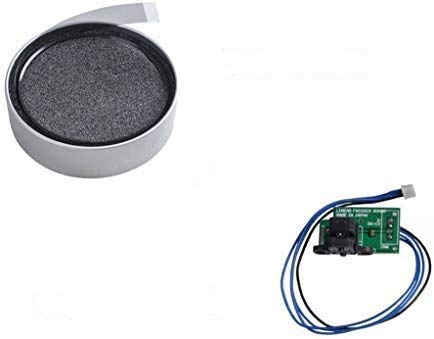
Encoder Strip & Board for Roland Printers
The Encoder Strip and Board for Roland printers is an essential component for professionals in the printing industry, particularly those utilizing models such as the FJ-540 and SJ-740. This high-quality encoder strip measures 2.6 meters in length and 15mm in width, ensuring precise movement tracking critical for high-quality outputs. Specifically designed for FJ, SJ, and SC series printers, the linear encoder board/sensor guarantees exceptional performance, which is vital for maintaining print accuracy and reliability.
For those who require prompt delivery, KD-Tec provides expedited shipping options, ensuring your order arrives within five days. This part, identified by the number 6700909040, is crucial for keeping your Roland printer operating smoothly and efficiently. Don’t compromise on quality—opt for this encoder strip and board!
Best For: Professionals working with Roland printers like the FJ-540 and SJ-740 who demand precision in movement tracking and print accuracy.
Pros:
- High-quality construction ensures dependable performance and longevity.
- Compatible with various Roland models (FJ, SJ, SC series) for added versatility.
- Expedited shipping options available for those with urgent needs, delivering within five days.
Cons:
- The brand’s reliability may be uncertain, potentially raising concerns about long-term performance.
- Compatibility is limited to specific Roland printer models, which may restrict use with other brands.
- Binding information is not specified, which could affect user experience.
In the broader context of technology, this encoder strip serves as a key component in the automation and precision engineering fields, underscoring the importance of reliable parts in the evolving landscape of printing technology and robotics.
BONKZEBU Stroke Linear String Pot Encoder Sensor

BONKZEBU Stroke Linear String Pot Encoder Sensor
Designed for precision applications across various technology fields, the BONKZEBU Stroke Linear String Pot Encoder Sensor stands out for its exceptional performance and reliability. With a measurement range of 10 to 1200mm and a linearity of 0.25% FS, it ensures accurate measurements in automation, robotics, and AI-driven systems. The push-pull output design optimizes performance, while the side output line facilitates easy connections. Its stable functionality guarantees reliable operation in diverse environments, making it suitable for various tech applications. Plus, its compact size enables flexible installations, allowing for seamless integration into complex systems. This sensor is ideal for industries such as manufacturing, testing machines, and water conservancy, showcasing its adaptability and dependable performance across multiple technological domains.
Best For: The BONKZEBU Stroke Linear String Pot Encoder Sensor is best suited for sectors requiring precise linear measurement, including automation, robotics, and testing.
Pros:
- Wide measurement range from 10 to 1200mm, catering to various technological applications.
- Push-pull output design enhances performance and ensures reliable connections.
- Compact size allows for flexible installation in constrained spaces.
Cons:
- Limited linearity of 0.25% FS may not cater to highly precise applications.
- Environmental sensitivity could impact performance in extreme conditions without adequate shielding.
- Potential compatibility issues with some legacy systems or equipment.
Factors to Consider When Choosing Linear Encoders
When selecting linear encoders for your automation and robotics projects, it’s crucial to consider several key factors. Specifications such as resolution, compatibility with your existing equipment, and installation requirements can significantly impact performance. Additionally, don’t overlook environmental resistance and durability; these qualities are essential for ensuring longevity and reliability in various applications, especially in the rapidly evolving landscape of AI advancements and technology integration.
Key Specifications And Features
Choosing the right linear encoder is essential for enhancing accuracy and efficiency in various technological applications, including automation and robotics. Start by considering the resolution; finer resolutions, such as 5μm or better, significantly improve measurement precision. Next, assess the maximum travel length, which can range from 220mm to 1000mm, depending on your specific needs. The output type—whether NPN or push-pull—plays a crucial role in compatibility with your control systems and can simplify the installation process. Signal phases, like ABZ phase, are vital for precise motion tracking, especially in advanced AI-driven environments. Lastly, pay attention to environmental factors; ensure the encoder can handle maximum speeds, such as 100m/min, and operate reliably under varying temperatures. By focusing on these key specifications, you’ll select an encoder that effectively meets the demands of your technology projects.
Resolution And Accuracy
In selecting a linear encoder, resolution and accuracy are crucial for optimal performance across various technological applications, including automation and robotics. Resolution denotes the smallest incremental change an encoder can detect, typically measured in micrometers (µm) or pulses per revolution (PPR). Higher resolution encoders, such as those offering 5µm or 2500 PPR, provide finer detail, which is particularly important in high-precision tasks, especially in AI advancements and automated systems.
Accuracy, in contrast, indicates how closely a measured value aligns with the true value, often represented as ±5µm. It’s important to note that factors like temperature fluctuations can impact accuracy, making regular calibration essential. Selecting an encoder with the appropriate resolution and accuracy is vital for enhancing efficiency and ensuring reliable performance in precision-driven applications across the tech landscape.
Compatibility With Equipment
Ensuring Compatibility with Equipment in Technology
Choosing the right linear encoder is crucial for optimizing performance and accuracy across various technologies, including automation, robotics, and AI advancements. Start by confirming that the encoder is compatible with your specific machinery—be it a lathe, mill, or printer. Next, examine the encoder’s dimensions to ensure it fits within your equipment’s designated installation space.
It’s also essential to verify the output type and signal compatibility, as different systems may require specific signals for seamless integration. Furthermore, consider the necessary resolution and measurement range; these should align with the precision requirements of your application.
Lastly, assess any installation needs, including potential modifications or additional components, to ensure a smooth and efficient setup. By conducting these checks, you can enhance performance and reliability in your technological operations.
Installation And Setup Requirements
Installation and Setup Requirements for Linear Encoders
When considering the installation and setup requirements for linear encoders, it’s crucial to ensure you have sufficient space for the encoder’s dimensions, such as the 2.6m length of encoder strips. Additionally, verify compatibility with your existing machinery, as modifications may be needed for mounting or cable connections. Precision is key; many encoders provide resolutions as fine as 5µm, which can significantly impact your installation methods for achieving optimal accuracy.
Environmental factors also play a vital role. Consider temperature ranges and potential exposure to dust or moisture, which may require protective measures like dust covers. Lastly, review the output type and signal interfacing options to guarantee seamless integration with your automation and robotics systems, maximizing the encoder’s performance in various technological applications.
Environmental Resistance And Durability
Selecting the Right Linear Encoder for Robust Performance
When it comes to choosing a linear encoder, particularly in the realms of automation, robotics, and AI advancements, environmental resistance and durability are critical factors that significantly influence performance. If your application is exposed to dust, moisture, or temperature variations, selecting an encoder designed to withstand these challenges is essential.
Opt for encoders constructed from high-grade materials that ensure superior durability and longevity. It’s important to check the IP ratings, which indicate the level of protection against water and dust ingress—two elements that can seriously impact measurement accuracy. Additionally, consider the operational temperature range; extreme conditions can compromise the reliability of your encoder.
Incorporating regular maintenance practices, such as using dust covers and protective shielding, can further extend the lifespan of the encoder. This proactive approach ensures that your encoder continues to deliver effective performance, even in demanding environments often encountered in advanced technological applications.
Signal Output Types
Understanding signal output types is crucial for optimizing the performance of your linear encoder, especially in the context of automation and robotics. Linear encoders typically utilize NPN and PNP outputs, which dictate the signal’s polarity. NPN outputs provide a sinking current, making them suitable for low-side switching applications, while PNP outputs source current for high-side applications.
In the realm of incremental encoders, you may encounter quadrature signals (A, B, and sometimes Z phases), which facilitate direction detection and precise tracking—key components in robotics and automation systems. The encoder’s resolution, indicated in pulses per revolution (PPR), directly influences output accuracy, thereby affecting the overall performance of your application.
It’s also essential to ensure that your selected output type aligns with your control system’s requirements to guarantee compatibility and effectiveness. By understanding these factors, you can make informed decisions that enhance your projects in automation and AI advancements.
Measurement Range And Limits
Measurement Range and Limits in Technology Applications
When selecting the right linear encoder for your automation or robotics project, understanding signal output types is crucial, but measurement range and limits are equally significant. The measurement range defines how far the encoder can accurately track movement, which is vital for precision in applications like robotics and AI-driven systems. For larger machinery, encoders with ranges around 1000mm are often ideal, while shorter ranges may be suitable for smaller tasks.
It’s also important to evaluate the encoder’s resolution within that range; higher resolution translates to enhanced detail in movement tracking. Additionally, consider operating limits such as maximum speed and environmental conditions, as these factors can significantly affect performance. Ensure that the encoder’s specifications are compatible with your specific application, as limitations in measurement range can restrict effectiveness in various technological settings.


