

In 2025, the best harmonic drives combine precision engineering and advanced functionality for various applications. The Harmonic Gear Drive Reducer 50:1 is perfect for tight spaces, while top lubricants like Harmonic 4B No.2 guarantee reliable performance. For automotive needs, kits like the Harmonic Balancer Puller from WETT simplify repairs. Each option focuses on accuracy, durability, and ease of use. Explore your options to find the perfect fit for your needs and discover more about their features.
Harmonic Gear Drive Reducer Small Strain Wave Gearbox 50:1

If you’re looking for a reliable and efficient solution for precision applications, the Harmonic Gear Drive Reducer Small Strain Wave Gearbox 50:1 is an ideal choice for you. This rotary reduction actuator directly fits Nema 17 stepper motors, ensuring easy assembly for various applications. Its elastic mechanics provide zero-backlash operation, making it a top contender in performance. You’ll appreciate its high torque, compact size, and impressive gear ratio of 30/50. Commonly used in industrial robots, CNC equipment, and medical instruments, this gearbox guarantees exceptional positional accuracy and repeatability. For more details, don’t hesitate to reach out for specifications.
Best For: This product is best for engineers and designers looking for a compact and efficient gearbox solution for precision robotics and automation applications.
Pros:
- Zero-backlash operation for enhanced precision and accuracy.
- High torque output in a compact design, saving space in applications.
- Direct compatibility with Nema 17 stepper motors for easy integration.
Cons:
- May have a higher initial cost compared to traditional gear reducers.
- Limited to specific motor sizes (Nema 17), which may restrict usability.
- Performance may vary based on application load and conditions.
Harmonic 4B No.2 500g Grease for Gear Drive Operation Lubrication

Harmonic 4B No.2 500g Grease is an ideal choice for those seeking reliable lubrication for robot harmonic drives and reducers. This high-performance grease operates effectively in temperatures ranging from -10°C to +70°C, ensuring your gear drives maintain peak function in various environments. Designed for exceptionally long life, it minimizes wear and tear, allowing your systems to run smoothly for extended periods. Whether you’re working on precise robotics or heavy-duty applications, this grease provides the durability and performance you need. Trust Harmonic 4B No.2 to keep your gear drives operating efficiently, so you can focus on achieving your engineering goals.
Best For: Those looking for reliable lubrication solutions for robot harmonic drives and reducers in various operating environments.
Pros:
- Designed for exceptionally long life, reducing the frequency of maintenance.
- Effective across a wide temperature range (-10°C to +70°C), ensuring optimal performance in diverse conditions.
- Minimizes wear and tear, promoting smooth operation and extending the lifespan of gear drives.
Cons:
- Limited to specific applications, primarily suited for harmonic drives and reducers, which may not meet all lubrication needs.
- 500g packaging may not be sufficient for larger projects or extensive use, requiring multiple purchases.
- Price point may be higher compared to general-purpose greases, which could be a consideration for budget-conscious users.
Harmonic Grease SK-1A 500g for Harmonic Reducer (MLA-SK-1A-500g)

For those seeking ideal performance in their harmonic drives, the Harmonic Grease SK-1A 500g is an excellent choice. This grease is specifically designed for harmonic reducer gears sized 20 and larger, ensuring compatibility with various applications. Operating effectively within a temperature range of 0°C to +40°C, it provides exceptional durability and enhances gear efficiency. Each pack contains 500g of this specialized grease, perfect for keeping your harmonic drives running smoothly. By using Harmonic Grease SK-1A, you’ll not only improve the performance of your gear operation but also extend the lifespan of your harmonic drives considerably.
Best For: Those operating harmonic drives with gears sized 20 and larger, seeking improved efficiency and durability.
Pros:
- Enhances efficiency in gear operation.
- Provides exceptional durability for extended use.
- Compatible with a wide range of harmonic drive applications.
Cons:
- Limited operating temperature range (0°C to +40°C).
- May not be suitable for smaller gear sizes under 20.
- Requires proper application to achieve optimal performance.
Harmonic Balancer Puller Kit for Chevy, GM, Chrysler, Cadillac, Ford

Engine enthusiasts and mechanics will appreciate the Reywoo Harmonic Balancer Puller Kit, designed specifically for Chevy, GM, Chrysler, Cadillac, and Ford vehicles. This adjustable 3-jaw puller makes removing harmonic damper pulleys a breeze. Compatible with various models, it features a forcing screw that fits a 3/8-inch square drive, ensuring ease of use. Crafted from heat-treated, high-hardness steel with a corrosion-resistant coating, it guarantees durability. The kit includes four forcing rods and a sturdy hard plastic case for storage. With a stellar 4.8 out of 5-star rating, it’s a must-have tool for any automotive enthusiast.
Best For: Engine enthusiasts and mechanics looking for an efficient tool to remove harmonic balancer pulleys from Chevy, GM, Chrysler, Cadillac, and Ford vehicles.
Pros:
- Durable Construction: Made from heat-treated, high-hardness steel with a corrosion-resistant coating for long-lasting use.
- Easy to Use: Adjustable 3-jaw design allows for quick and secure removal of harmonic damper pulleys.
- Comprehensive Kit: Includes multiple forcing rods and a sturdy case for organized storage.
Cons:
- Limited Compatibility: May not be suitable for all vehicle models outside the specified brands and years.
- Weight: At 4.02 pounds, the tool may be heavier than some users prefer for frequent portability.
- Forcing Screw Size: Requires a 3/8-inch square drive, which may necessitate additional tools for some users.
WETT Harmonic Balancer Puller Set for Automotive Repair
Product not found or API error.
When tackling automotive repairs, having the right tools makes all the difference, and the WETT Harmonic Balancer Puller Set stands out as a must-have for mechanics and DIY enthusiasts alike. This 6-piece kit includes a three-jaw puller, a forcing screw, and four rods of varying lengths, ensuring compatibility with numerous vehicles, from Chevrolet trucks to various GM engines. Crafted from durable carbon steel, it minimizes damage while effectively removing press-fit harmonic balancers. Housed in a compact case, it’s easy to store and transport. With a solid 4.7-star rating, users appreciate its quality and performance, making it a reliable addition to your toolkit.
Best For: The WETT Harmonic Balancer Puller Set is best for automotive mechanics and DIY enthusiasts looking for a reliable tool to remove harmonic dampers and balancers from a variety of vehicles.
Pros:
- High-quality construction: Made from durable carbon steel with a protective coating, ensuring longevity and resistance to wear.
- Versatile compatibility: Works with a wide range of domestic and import vehicles, making it a useful addition to any mechanic’s toolkit.
- Compact storage: Comes in a sturdy case that organizes the tools for easy accessibility and transport.
Cons:
- Arm length limitations: Some users have noted that the arm length may not be sufficient for larger engine models.
- Case size efficiency: A few reviews mentioned that the storage case could be designed more efficiently for better space utilization.
- Minor learning curve: Some users may require a short adjustment period to use the tool effectively in tight spaces.
KJE Harmonic Balancer Puller Kit
Product not found or API error.
The KJE Harmonic Balancer Puller Kit is an essential tool for DIY enthusiasts and professional mechanics alike, thanks to its adjustable 3-jaw design that guarantees a strong grip on harmonic dampers and balancers. Weighing just 3.91 pounds and measuring 11.14 x 8.54 x 2.8 inches, it’s portable and easy to store in its durable blow-molded case. This kit efficiently removes pressed-on balancers with a single center retainer bolt, saving you time. Crafted from high-strength AISI 1045 carbon steel, it resists wear and corrosion, making it a reliable choice for various vehicles, all for under $25—a fantastic value!
Best For: DIY enthusiasts and professional mechanics looking for an efficient and portable tool to remove harmonic dampers and balancers.
Pros:
- Adjustable 3-jaw design provides a strong grip for efficient removal.
- Made from high-strength AISI 1045 carbon steel, ensuring durability and resistance to wear and corrosion.
- Compact and lightweight with a blow-molded case for organized storage and easy transport.
Cons:
- May not be suitable for heavy-duty shop use, as it is designed more for personal projects.
- Some users reported limitations in compatibility with specific vehicle models.
- Forcing screw may require additional tools for optimal use, depending on the situation.
DPTOOL Harmonic Balancer Puller Set for Crankshaft and Pulley Removal
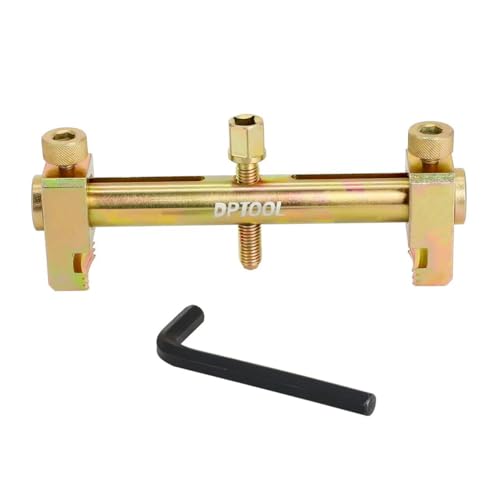
Designed for automotive enthusiasts and professional mechanics alike, the DPTOOL Harmonic Balancer Puller Set excels in removing stubborn crankshaft and auxiliary pulleys. With adjustable arms accommodating pulley sizes from 35 to 160 mm, it’s versatile for various applications, including crankshafts and generators. Constructed from high-quality steel, this durable tool features precision machining and a triple-threaded screw for a secure grip without causing damage. Using the puller is straightforward; just hook the claw onto the pulley, adjust the crossbar, and turn with a wrench. Weighing 3.34 pounds and rated 4.6 stars, it’s a reliable choice for tight spaces and tough jobs.
Best For: Automotive enthusiasts and professional mechanics looking for a reliable tool to remove stubborn crankshaft and auxiliary pulleys.
Pros:
- Versatile design accommodates pulley sizes from 35 to 160 mm, suitable for various applications.
- Constructed from high-quality steel for durability and resistance to damage.
- Easy to use with straightforward setup and operation, making it ideal for tight spaces.
Cons:
- Weighs 3.34 pounds, which may be heavier compared to some lighter alternatives.
- Requires a hex wrench or specific wrenches for operation, which may not be included in the set.
- Effectiveness may vary depending on the specific design of the pulleys being removed.
Factors to Consider When Choosing Harmonic Drives
When you’re choosing harmonic drives, several key factors can make all the difference. Think about the gear ratio you need, the acceptable backlash, and how size and weight fit into your design. Don’t overlook material durability and the temperature range to guarantee peak performance in your application.
Gear Ratio Selection
How do you choose the right gear ratio for your harmonic drive? Start by considering your application’s specific operational requirements. Higher gear ratios, like 30:1 or 50:1, offer greater torque but reduce speed, so you need to find the right balance. Think about the efficiency and performance of your system; lower backlash ratios enhance positional accuracy, essential for robotics and CNC machinery. Make sure the selected gear ratio matches your motor’s specifications, including torque and RPM limits, to avoid overload. Additionally, factor in the application environment and expected load conditions, as these can greatly affect your choice. By carefully analyzing these factors, you can optimize your harmonic drive for peak performance.
Backlash Considerations
Understanding backlash is essential for optimizing harmonic drives, especially since it directly affects precision and accuracy in your applications. Backlash, the play between input and output shafts, can lead to errors in motion control if not properly managed. One of the standout features of harmonic drives is their ability to achieve zero-backlash operation, ensuring high positional accuracy and repeatability. This is typically accomplished through the elastic deformation of the wave generator, which enables tight gear meshing. When selecting a harmonic drive, always evaluate its backlash specifications. High torque strain wave gearboxes with low backlash characteristics, like those featuring a 30/50 gear ratio, are particularly well-suited for precision applications in robotics and CNC machinery. Your choice will greatly impact system performance.
Size and Weight
Choosing the right size and weight for harmonic drives is vital for optimizing your application’s performance. Compact designs are often preferred for tight installations, allowing you to maximize available space. Lighter harmonic drives can greatly reduce the overall system weight, enhancing efficiency and performance, especially in dynamic applications. You’ll need to guarantee that the dimensions, including flange size and mounting configurations, are compatible with your motors and machinery for proper fit and function. Smaller harmonic drives can provide high reduction ratios and torque capabilities while maintaining a lightweight profile, making them ideal for robotics and automation. Ultimately, it’s important to balance size and weight against your performance requirements to meet your application’s torque, speed, and precision needs effectively.
Material Durability
When selecting harmonic drives, material durability plays a vital role in guaranteeing long-term performance. You’ll want to choose high-strength alloys like AISI 1045 carbon steel, known for their wear and corrosion resistance. Protective coatings can further enhance durability by preventing oxidation, especially in harsh conditions. The design, involving precision machining and forging, contributes to the drive’s robustness, allowing it to withstand high torque loads without failing. However, regular maintenance and proper lubrication are essential; even the best materials can degrade over time without care, impacting performance and lifespan. Always consider the material’s integrity under expected operating conditions, as extreme environments can compromise durability. Making informed choices here guarantees your harmonic drives perform at their best over time.
Temperature Range Suitability
While evaluating harmonic drives, the temperature range suitability is crucial for ensuring they perform reliably in your specific application. Typically, these drives function well within a range of -10°C to +70°C, providing versatility across various environments. It’s essential to choose a harmonic drive that aligns with the temperature conditions you’ll encounter, as operating outside this range can lead to reduced lubrication effectiveness and increased wear. This could ultimately result in gear backlash and diminished overall reliability. Additionally, specialized lubricants designed for harmonic drives perform effectively within these temperature limits, contributing to the drive’s longevity and efficiency. So, always match the temperature specifications of the harmonic drive with your application environment to maintain peak performance.
Compatibility With Motors
Compatibility with motors is a key factor in selecting the right harmonic drive for your application. First, verify the harmonic drive matches the motor’s flange size, like the standard Nema 17, to simplify assembly. Next, check your torque requirements; harmonic drives typically offer higher torque output, especially in strain wave gearboxes. Don’t overlook the gear ratio—options like 30:1 or 50:1 considerably influence speed and torque characteristics. It’s also vital to confirm that the harmonic drive’s operating temperature range aligns with your motor’s specs to avoid overheating. Finally, assess the backlash specifications to achieve precise control and positioning, especially for applications that demand high accuracy. Selecting the right combination will enhance your system’s overall performance.
Application Specific Requirements
Selecting the right harmonic drive goes beyond just matching it with a motor. First, determine the torque and speed specifications for your application; this guarantees the drive meets your operational demands. Next, assess the load capacity required for your task, as different designs handle various weight and force levels. Don’t forget to take into account space constraints; harmonic drives are often preferred for their compact size, which is vital in tight environments. Evaluate the backlash requirements too, since some applications demand zero-backlash capabilities for precise movement. Finally, identify the necessary operating temperature range to verify the harmonic drive functions reliably within those thermal conditions. By addressing these factors, you’ll choose a harmonic drive that perfectly suits your needs.


