

In 2025, you’ll find the ATO Micro Rotary Torque Sensor ideal for dynamic measurements, while the ATO Dynamic Torque Sensor excels in CNC applications. For torque wrench calibrations, consider the ATO Static Torque Sensor. The Steering Torque Sensor is a great fit for 2008-2012 Ford models. Don’t miss the WWZMDiB Load Cell Amplifier for those precise readings. Looking for versatility? The Taidacent Half Bridge Strain Gauge is a top choice. Keep exploring to uncover more options!
ATO Micro Rotary Torque Sensor for Dynamic Torque Measurement (5 Nm, 0.5% FS Accuracy)
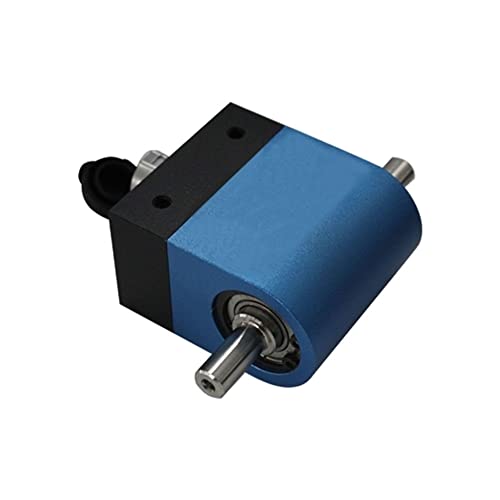
If you’re looking for a reliable torque sensor that delivers precise dynamic measurements, the ATO Micro Rotary Torque Sensor is an excellent choice, especially for those working with AC/DC motors and gear systems. With a 5 Nm capacity and 0.5% FS accuracy, it guarantees you get accurate readings every time. Its output signal of 0-20 mV provides seamless integration into your systems. Crafted from durable stainless steel and boasting an IP65 protection class, this sensor withstands tough environments. It’s perfect for measuring both forward and reverse torque, making it a versatile tool for various applications in your projects.
Best For: The ATO Micro Rotary Torque Sensor is best for engineers and technicians working with AC/DC motors and gear systems who require accurate dynamic torque measurements.
Pros:
- High accuracy with 0.5% FS ensures reliable readings for precise applications.
- Durable stainless steel construction and IP65 protection make it suitable for harsh environments.
- Versatile measurement capabilities for both forward and reverse torque, catering to various project needs.
Cons:
- Limited capacity of 5 Nm may not be suitable for high-torque applications.
- Output signal of 0-20 mV might require additional signal conditioning for some systems.
- Relatively low market rank could indicate less familiarity or preference among users in comparison to other brands.
ATO Dynamic Torque Sensor, 0-10Nm Range, Torque Transducer

The ATO DYN-203 Dynamic Torque Sensor stands out for its ability to deliver precise torque measurements in the 0-10Nm range, making it an ideal choice for machine tool operators and engineers who need accurate monitoring during CNC machining processes. It provides real-time torque data, outputs signals for both forward and reverse torque, and maintains high accuracy down to 0.025% of full scale. Built with corrosion-resistant materials and an IP67 enclosure, it’s durable for industrial environments. Plus, its standard interfaces allow for quick integration into CNC systems, optimizing production and preventing tool damage effectively.
Best For: The ATO DYN-203 Dynamic Torque Sensor is best for machine tool operators and engineers requiring precise torque measurements during CNC machining processes.
Pros:
- High accuracy and repeatability with torque readings down to 0.025% of full scale.
- Durable construction with corrosion-resistant materials and an IP67 enclosure for reliability in harsh environments.
- Easy integration into CNC systems with standard electrical and mechanical interfaces.
Cons:
- Maximum speed limit of 3000 RPM may not be suitable for all high-speed applications.
- Limited torque range of 0-10Nm may not meet the needs of heavy-duty machinery.
- The requirement for compatible mounting flanges may necessitate additional hardware for some setups.
ATO Static Torque Sensor (5-200 Nm) for Torque Wrench Calibration

Engineers and technicians looking for a reliable tool for torque wrench calibration will find the ATO Static Torque Sensor (5-200 Nm) an exceptional choice. This reaction torque sensor offers a capacity range of 5 to 200 Nm, making it versatile for various applications, including testing AC/DC motors and viscometers. Built from durable alloy steel with a powder-coated finish, it features a C-shaped head and an IP65 protection class for durability. Plus, with a safety overload of 120% FS, you can trust its reliability. You can also enjoy a 30-day return policy, ensuring peace of mind with your purchase.
Best For: Engineers and technicians seeking a reliable and versatile tool for torque wrench calibration and testing applications.
Pros:
- Durable construction with alloy steel and a powder-coated finish ensures long-lasting performance.
- Wide capacity range of 5 to 200 Nm accommodates various torque testing needs.
- IP65 protection class provides resistance against dust and water, enhancing durability in different environments.
Cons:
- Limited to static torque measurement, which may not suit all applications.
- May require additional connectors or adapters for certain setups due to its 5 pin circular connector.
- Initial investment cost may be higher compared to simpler torque measuring devices.
Steering Torque Sensor Compatible for 2008-2012 Escape and Mercury Mariner
Product not found or API error.
For owners of the 2008-2012 Ford Escape and Mercury Mariner, the Steering Torque Sensor offers a perfect blend of compatibility and reliability, ensuring your vehicle’s steering system functions smoothly. This sensor, with part numbers CL8Z-3F818-A, CL8Z3F818A, and CL8Z 3F818 A, is specifically designed for your model years. It comes complete with a steering angle sensor and alignment tool, ensuring ease of installation. Factory tested to meet or exceed OEM specifications, it guarantees high-quality performance. Plus, with a lifetime warranty and significant savings compared to dealer prices, you’ll enjoy peace of mind and cost efficiency without compromising performance.
Best For: Owners of 2008-2012 Ford Escape and Mercury Mariner looking for a reliable and affordable steering torque sensor replacement.
Pros:
- Factory tested to meet or exceed OEM specifications, ensuring high-quality performance.
- Comes with a steering angle sensor and alignment tool for easy installation.
- Offers significant cost savings compared to dealer prices, along with a lifetime warranty.
Cons:
- Compatibility is limited to only specific model years (2008-2012).
- Users must verify part numbers before purchase to ensure proper fit.
- Potential for installation challenges if the user is not mechanically inclined.
WWZMDiB Load Cell Amplifier with HX711 Sensor Module (5KG)

With its impressive 24-bit measurement resolution, the WWZMDiB HX711 Load Cell Amplifier is an ideal choice for professionals seeking precise force and torque measurements in various applications. It operates within a voltage range of 2.6V to 5.5V, consuming less than 10 mA. You’ll appreciate its selectable data rates of 10SPS or 80SPS, ensuring quick refresh rates. Featuring two differential input channels and a low-noise PGA, it guarantees high accuracy with minimal error. This versatile amplifier suits fields like aerospace, construction, and medicine, easily interfacing with microcontrollers for seamless integration. Users praise its calibration ease and overall performance.
Best For: Professionals and hobbyists requiring precise force and torque measurements in fields such as aerospace, construction, and medicine.
Pros:
- High measurement resolution of 24 bits ensures exceptional accuracy.
- Easy integration with microcontrollers through a simple two-wire interface.
- Low power consumption (<10 mA) makes it suitable for battery-operated applications.
Cons:
- Some users report discrepancies in expected quantity and dimensions.
- Requires careful calibration to achieve optimal accuracy.
- Limited to differential input channels, which may not suit all applications.
Taidacent Half Bridge Strain Gauge Wheatstone Bridge Sensor (2PCS)

The Taidacent Half Bridge Strain Gauge Wheatstone Bridge Sensor (2PCS) stands out for its impressive resistance options, making it an ideal choice for professionals seeking precision in torque and shear force measurements. With resistance types available at 350 ohm, 1000 ohm, and 120 ohm, you can easily find the right fit for your project. The sensor boasts a heat output coefficient of less than 2 um/m/℃ and a room temperature insulation resistance of 10,000 mohm. Constructed with durable Novolac-epoxy and sensitive Constantan material, it guarantees reliable performance, helping you achieve accurate results every time.
Best For: Professionals and engineers seeking precise torque and shear force measurements in various applications.
Pros:
- Multiple resistance options (350 ohm, 1000 ohm, 120 ohm) for versatile project compatibility.
- Durable construction with Novolac-epoxy and Constantan material for reliable performance.
- High insulation resistance of 10,000 mohm ensuring minimal interference and accurate readings.
Cons:
- Limited to half-bridge configuration, which may not suit all measurement needs.
- Sensitivity to temperature changes may require calibration in varying conditions.
- Potentially higher cost compared to simpler strain gauge options.
WWZMDiB Load Cell Amplifier with HX711 Sensor Module (10KG)
Engineers and hobbyists seeking an accurate and versatile solution for measuring force will find the WWZMDiB Load Cell Amplifier with HX711 Sensor Module (10KG) an exceptional choice. This compact module operates within a voltage range of 2.6V to 5.5V, providing precision with a 24-bit measurement resolution. It’s perfect for various applications, from aerospace to medicine. With a refresh frequency of 80 Hz and selectable gain options, you’ll achieve reliable results. Users appreciate its easy integration and high accuracy, making it a go-to for your projects. Just be cautious about delivery details to guarantee you receive everything you need.
Best For: Engineers and hobbyists looking for an accurate and versatile solution for measuring force in various applications.
Pros:
- High precision with +/- 1% accuracy and a 24-bit measurement resolution.
- Compact design allows for easy integration into projects and limited space setups.
- Selectable gain options and refresh frequency provide flexibility for different measuring needs.
Cons:
- Some users reported delivery issues, receiving fewer units than expected.
- Lack of comprehensive technical documentation may hinder troubleshooting and installation for some users.
- Operating temperature range might limit use in extreme environments.
Factors to Consider When Choosing Force Torque Sensors
When you’re choosing force torque sensors, consider several key factors to guarantee you get the right fit for your application. You’ll want to look at measurement range capabilities, accuracy, and how well the sensor performs in your specific environment. Additionally, think about output signal compatibility and how easy it is to integrate and install the sensor in your setup.
Measurement Range Capabilities
Choosing the right force torque sensor hinges on understanding its measurement range capabilities. The measurement range defines the minimum and maximum torque values the sensor can accurately capture, which is essential for your specific application. A sensor with a wider range can handle various tasks, from low-torque (0-5 Nm) to high-torque (0-200 Nm) applications, boosting its versatility. Keep in mind that precision often varies across this range, so look for sensors with specifications like ±0.5% of full scale or better. You should also consider the sensor’s overload capacity, as many offer a safety rating (e.g., 120% FS) to prevent damage during unexpected spikes. Finally, evaluate the maximum rotational speed, ensuring it suits your dynamic application needs.
Accuracy and Precision Levels
While selecting a force torque sensor, understanding accuracy and precision levels is vital to secure reliable measurements in your applications. Accuracy can vary greatly; some sensors offer precision down to 0.025% of full scale, making them ideal for critical tasks. Measurement resolution also plays a key role; a 24-bit resolution allows you to detect minute changes in force or torque, providing detailed insights. Remember, calibration is essential for maintaining accuracy over time; some sensors require less routine calibration but still need monitoring to guarantee precision. Additionally, real-time data output enhances your ability to monitor torque levels instantly, especially during dynamic processes like CNC machining, ensuring you get the most accurate readings when you need them most.
Environmental Protection Ratings
Understanding environmental protection ratings is essential for selecting the right force torque sensor for your application, as these ratings determine how well a sensor can withstand dust, moisture, and other harsh conditions. Look for IP ratings, like IP65, which provides complete dust protection and guards against low-pressure water jets. If your environment is harsher, consider sensors with higher ratings, such as IP67, which can handle temporary immersion in water. Assess factors like humidity, temperature extremes, and chemical exposure, as they can impact performance and longevity. Opt for sensors made from corrosion-resistant materials to enhance durability. By choosing a sensor with the appropriate environmental rating, you can prevent costly failures and maintenance issues, ensuring reliable operation in challenging conditions.
Output Signal Compatibility
When selecting force torque sensors, output signal compatibility plays an essential role in ensuring seamless integration with your existing systems. You’ll want to take into account the common output signals, such as analog formats like 0-20 mV or digital signals like I2C or SPI. Your choice of output signal directly affects the sensor’s response time and accuracy when measuring dynamic torque. Some sensors offer higher resolution outputs, like 24-bit, for precise measurements. It’s important to match the sensor’s output type with the input requirements of your monitoring or control system. Additionally, keep in mind the long-term compatibility, as future system upgrades might necessitate sensors with different output specifications to maintain functionality.
Integration and Installation Ease
Choosing the right force torque sensor hinges on how easily it can be integrated and installed within your existing systems. Look for sensors with standard electrical and mechanical interfaces, especially if you’re using CNC or robotic applications. Quick installation options, like standard mounting flanges, can save you time and guarantee compatibility with most machinery setups. Evaluate how easily you can calibrate the sensor and whether it allows for straightforward adjustments without specialized tools. Also, check compatibility with communication protocols and microcontroller interfaces, as this can streamline integration into automated systems. Finally, opt for sensors with robust enclosure ratings, such as IP65 or IP67, to ensure reliability during installation in various industrial environments.
Construction Material Durability
Since the construction material of force torque sensors plays a vital role in their long-term performance, it’s important to evaluate what materials will best withstand the demands of your specific environment. Stainless steel and alloy steel are commonly used for their strength and corrosion resistance, making them ideal for harsh industrial settings. Look for sensors with an IP67 or higher protection rating to safeguard against dust and water, which enhances durability. If your application involves chemicals or moisture, choose corrosion-resistant materials to prevent degradation. Additionally, consider the sensor’s design, including head style and mounting type, as these factors influence mechanical stability. Opt for models that don’t require routine calibration to guarantee long-term reliability and consistent measurement accuracy.
Application Specific Features
To guarantee you select the right force torque sensor for your application, it’s vital to take into account several key features that directly impact performance. First, consider the measurement range; for instance, micro rotary sensors might need a range of 0-5 Nm, while dynamic torque sensors could require 0-10 Nm. Accuracy matters too—high-performance sensors can achieve precision as low as 0.025% of full scale. Also, check the sensor’s protection class, like IP65 or IP67, to guarantee durability in harsh environments. Real-time data output is essential for applications like CNC machining, allowing for immediate feedback. Finally, confirm compatibility with your existing equipment to streamline installation and reduce setup time.
Warranty and Support Options
When evaluating force torque sensors, understanding the warranty and support options is vital for making a smart investment. Start by checking the warranty duration, as it reflects the manufacturer’s confidence in their product’s durability. Many sensors offer a return guarantee, typically allowing returns within 30 days, giving you extra assurance. Make sure you review the warranty details, including coverage specifics and conditions for repairs or replacements of defective units. Prompt customer support is important, so look for manufacturers that provide assistance within 12 to 24 hours for any installation or operational issues. Finally, consider sensors with a lifetime warranty, as this often indicates a strong commitment to product quality and customer satisfaction over time.


