

When you’re selecting force sensors for your projects in 2025, consider these top picks: the Mini Load Cell Sensor (0-20KG) for compact spaces, the ultra-thin RP S40 ST for flexibility, and the ZD10-100 for precise detection. Don’t overlook the Mini Load Cell with an indicator, the user-friendly Digital Force Gauge, and the affordable 4Pcs Thin Film Sensors perfect for Arduino DIY. Each option offers unique features and benefits, and you’ll discover even more excellent choices ahead.
Mini Load Cell Sensor (0-20KG)
Product not found or API error.
If you need a reliable solution for weighing forces in compact spaces, the Mini Load Cell Sensor (0-20KG) is an excellent choice for you. This button-type scale excels in tension and compression testing, with a measurement range of 0-20KG. Its advanced resistance strain gauge technology guarantees accuracy of ±0.2%. The unique diaphragm structure distributes stress evenly, enhancing stability and resistance to impacts. Constructed from high-strength, corrosion-resistant materials, it delivers durability in harsh conditions. Whether for product packaging or warehousing management, this sensor adapts to diverse applications, making it a dependable tool for your projects in 2025 and beyond.
Best For: The Mini Load Cell Sensor (0-20KG) is best for industries requiring precise weight measurement in compact spaces, such as packaging and warehousing management.
Pros:
- High measurement accuracy of ±0.2%, ensuring reliable data for various applications.
- Durable construction from corrosion-resistant materials, suitable for harsh environments.
- Versatile design for both tension and compression testing, adaptable to diverse industrial needs.
Cons:
- Limited measurement range of 0-20KG may not suit heavier applications.
- Requires calibration for optimal accuracy, which may add to setup time.
- The compact size may restrict usage in certain large-scale operations.
RP S40 ST Thin Film Pressure Sensor (20g-10kg)

The RP S40 ST Thin Film Pressure Sensor stands out as an ideal choice for developers of intelligent balance vehicles and high-end seat systems, thanks to its remarkable pressure sensing range of 20g to 10kg. Weighing just 3g and measuring 5 x 4 cm, its ultra-thin 0.45mm design guarantees flexibility and high stability. With a response time under 10ms, it delivers real-time force conversion to an analog output. The advanced thin film technology uses innovative nano materials, providing high accuracy and low power consumption. Whether in extreme temperatures or demanding applications, this sensor meets your needs effectively.
Best For: Developers of intelligent balance vehicles and high-end seat systems seeking a lightweight and flexible pressure sensing solution.
Pros:
- High Accuracy: Detects forces with an ultra-thin structure, ensuring precise measurements.
- Fast Response Time: Quick activation and response time under 10ms, allowing for real-time monitoring.
- Flexible Design: Ultra-thin and lightweight construction (0.45mm thick, 3g) makes it easy to integrate into various applications.
Cons:
- No Documentation Included: Lacks physical documentation, requiring users to seek information online.
- Limited Pressure Range: Only suitable for applications with pressure requirements between 20g to 10kg.
- Potential for Resistance Variability: Resistance changes significantly with applied pressure, which may complicate certain applications.
Thin Film Pressure Sensor ZD10-100
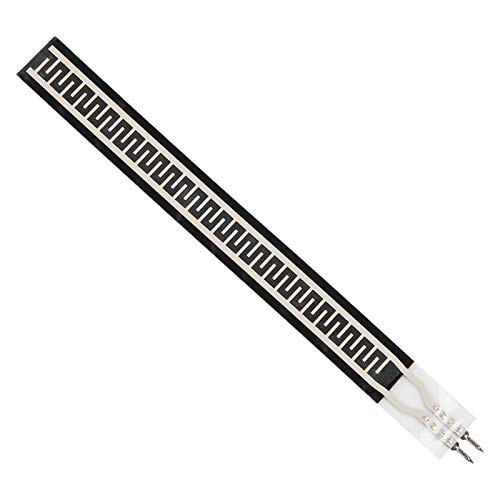
For those seeking a highly sensitive solution in force measurement, the Thin Film Pressure Sensor ZD10-100 stands out with its flexible ultra-thin design. Weighing just 0.106 ounces and measuring 4.33 x 0.39 x 0.1 inches, it’s perfect for integrating into various devices. This waterproof sensor boasts a force sensing range of up to 500g, using advanced nanometer materials for precise pressure detection. With a resistance-type detection method, it accurately senses slight pressure changes, making it versatile for both industrial and DIY projects. Plus, it comes with a 30-day return guarantee for added peace of mind.
Best For: Individuals and businesses looking for a reliable and sensitive pressure sensor for both industrial applications and DIY projects.
Pros:
- Flexible Ultra-Thin Design: Easily integrates into various devices without added bulk.
- Waterproof and Pressure-Sensitive: Suitable for diverse environments and applications.
- High Sensitivity: Utilizes advanced nanometer materials for accurate pressure detection.
Cons:
- Limited Force Sensing Range: Maxes out at 500g, which may not be sufficient for all applications.
- Requires External Power Source: Operates at 1 Volt, which may need additional components for certain setups.
- Warranty Details Not Clearly Specified: Potential buyers must inquire for warranty information, which can be inconvenient.
Mini Load Cell Sensor with Indicator Transmitter Amplifier Display

Engineers and technicians looking for a reliable solution in force measurement will find the Mini Load Cell Sensor with Indicator Transmitter Amplifier Display an outstanding choice. This sensor offers a range from 20kg to 2000kg, ensuring accuracy with advanced strain gauge technology. Its built-in microprocessor enables automatic calibration and temperature compensation, enhancing efficiency. With durable construction, it boasts IP66 protection against harsh conditions. Installation is quick and easy, backed by extensive support. Plus, it integrates seamlessly with PLC and DCS systems via RS485 and Modbus RTU, making data management and remote monitoring straightforward. It’s a smart investment for any project.
Best For: Engineers and technicians seeking a reliable and accurate force measurement solution for various applications.
Pros:
- High-precision measurement with advanced strain gauge technology.
- Durable construction with IP66 protection, suitable for harsh environments.
- Easy integration with PLC and DCS systems for efficient data management.
Cons:
- Limited measurement range compared to some industrial load cells.
- Requires initial setup and calibration for optimal performance.
- May need specialized knowledge for advanced features like Modbus RTU integration.
Digital Force Gauge Push and Pull Meter
Product not found or API error.
Designed for both professionals and educators, the Digital Force Gauge Push and Pull Meter stands out with its impressive 500N capacity, making it ideal for a range of applications from scientific research to industrial testing. It measures tension, pressure, thrust, and compression loads, offering four units: Newton, Kilogram, Pound, and Ounce. You’ll appreciate the user-defined gravity setting for precise conversions and the buzzer alarm for limit exceedances. The easy-to-read display is perfect for various lighting conditions, while the automatic shutdown helps save battery life. With positive feedback on durability, this tool guarantees accurate measurements across multiple uses.
Best For: The Digital Force Gauge Push and Pull Meter is best for professionals in industrial testing and educators conducting scientific experiments.
Pros:
- Accurate measurements across various loads with multiple unit options for flexibility.
- Durable construction and positive feedback on reliability, suitable for frequent use.
- User-friendly design with a backlit display and helpful features like automatic shutdown and a peak measurement function.
Cons:
- Initial instructions may be lacking, requiring users to seek additional resources for understanding.
- Suggested improvements include larger hooks for enhanced functionality during use.
- Some users may find the learning curve steep without visual aids for better comprehension.
4Pcs Thin Film Pressure Sensor for Arduino DIY

The 4Pcs Thin Film Pressure Sensor stands out as an excellent choice for DIY enthusiasts and hobbyists aiming to enhance their Arduino projects. With a high sensitivity force-sensitive resistor and an ultra-thin 0.4mm profile, it measures forces ranging from 20g to 2kg. You’ll appreciate its rapid response time of under 10ms and durability, engineered for over 1 million uses. This sensor adapts to both static and dynamic pressure applications, making it versatile for various uses. While it excels in presence detection, keep in mind that precision in weight measurement can be a concern. Enjoy experimenting with this reliable tool!
Best For: DIY enthusiasts and hobbyists looking to enhance their Arduino projects with a versatile pressure sensor.
Pros:
- High sensitivity and rapid response time, making it suitable for various applications.
- Ultra-thin design allows for easy integration into projects without adding bulk.
- Durable construction ensures longevity, capable of over 1 million uses.
Cons:
- Precision in weight measurement may be lacking for some practical applications.
- May not be ideal for applications requiring highly accurate readings.
- Performance might vary slightly in different environmental conditions.
4Pcs Thin Film Pressure Sensor for Arduino DIY

If you’re a DIY enthusiast looking to enhance your Arduino projects, the 4Pcs Thin Film Pressure Sensor stands out as an excellent choice. With a thickness of just 0.4 mm and a sensitivity ranging from 20 g to 2 kg, it’s perfect for various applications. This sensor boasts quick activation and response times, along with stability in both static and dynamic conditions. It’s durable, resisting damage from overloads while maintaining performance through countless cycles. Easy to install and integrate, it’s ideal for pressure-sensitive projects, from robotics to wearables. Just remember to calibrate for precise measurements and protect it from moisture.
Best For: DIY enthusiasts, hobbyists, and developers looking for a versatile pressure sensor for Arduino projects.
Pros:
- High sensitivity with a wide sensing range from 20 g to 2 kg, making it suitable for various applications.
- Durable and resistant to overloads, capable of maintaining performance through millions of cycles.
- Easy to integrate into projects with quick activation and response times, ideal for robotics and wearable technology.
Cons:
- Calibration required for precise measurements, as unit-to-unit variance may occur.
- Moisture protection necessary for reliable performance if exposed to liquids.
- Delicate electrodes that require careful handling during installation and wiring to prevent damage.
Factors to Consider When Choosing Force Sensors
When choosing force sensors, you should consider several key factors to guarantee you get the right fit for your project. Measurement range, sensitivity, and environmental resistance are essential for accurate data collection. Additionally, think about the size and compatibility with your existing systems to streamline integration.
Measurement Range Capabilities
Choosing the right force sensor hinges on understanding its measurement range capabilities, as this defines the minimum and maximum forces it can detect accurately. You’ll find measurement ranges vary widely, from as low as 20 grams to over 2000 kilograms, so consider your specific application needs. It’s essential to select a sensor with a range that surpasses the expected forces to prevent saturation and guarantee reliable readings. High-precision sensors usually maintain accuracy within ±0.2% of their operational limits, making them ideal for dependable data collection. Don’t forget to account for the application context, whether you’re dealing with dynamic or static forces, since different sensors perform better under specific loading conditions within their measurement ranges.
Sensitivity and Accuracy
Sensitivity and accuracy are critical factors that considerably impact the performance of force sensors in various applications. When choosing a force sensor, you’ll want one with high sensitivity to detect even the smallest changes in force, ideally able to sense forces as low as 20g. Accuracy is equally important; look for models that achieve measurement accuracy within ±0.2% of the reading to guarantee reliability. Advanced technologies, like resistance strain gauges or thin film materials, can enhance both sensitivity and accuracy, making them ideal for precise measurements. Additionally, consider models with low drift rates—less than 3% resistance variance—to maintain consistent accuracy over time. Prioritizing these features will help you select the right force sensor for your project needs.
Environmental Resistance Factors
Environmental resistance is vital for guaranteeing that force sensors perform reliably in diverse settings. When choosing a sensor, consider its temperature range; models that operate effectively between -40°C to 85°C can handle extreme conditions. Look for sensors that are waterproof and dust-proof, ideally rated at IP66, to guarantee durability in harsh environments. It’s also important to select sensors resistant to electromagnetic interference (EMI) and electrostatic discharge (ESD) for stable, accurate readings. High-strength and corrosion-resistant materials enhance longevity, especially in industrial applications where exposure to chemicals is common. Finally, verify the sensor can handle repeated bending and pressing without degradation, with some rated for over 1 million uses, making them perfect for dynamic applications.
Size and Form Factor
When evaluating force sensors, size and form factor play a critical role in how well they fit into your specific application. You’ll find a range of options, from compact thin film sensors measuring just 5 x 4 cm to larger load cells requiring more installation space. Consider the thickness; for instance, the RP S40 ST, at only 0.45 mm thick, is perfect for tight spots. The diameter also matters—sensors like the Mini Load Cell Sensor with a 20 mm diameter can influence pressure distribution and measurement accuracy. Flexibility in design, especially with ultra-thin sensors, allows for diverse applications, including wearables. Make sure the dimensions align with your project’s needs, ensuring peak performance for either industrial or consumer electronics.
Integration and Compatibility
Choosing the right force sensor means considering how well it integrates with your existing systems. First, verify the sensor’s output signal format—whether analog or digital—matches your setup for seamless communication. Next, evaluate the physical dimensions and mounting requirements to fit comfortably in your designated space without extensive modifications. It’s also essential to check the operating temperature range, guaranteeing the sensor performs well in your application’s environment. Don’t forget to assess the electrical specifications, including supply voltage and current needs, to align with your power supply. Finally, consider the communication protocols, like RS485 or Modbus RTU, for smooth integration with data acquisition systems and remote monitoring setups. This compatibility will enhance your project’s efficiency.


