

In 2025, energy monitors like the Sense Energy Monitor and Emporia Vue 3 offer real-time insights into your electricity usage, helping you save on utility bills. The Sense Flex and models with solar integration enhance monitoring options for diverse needs. Features like custom alerts and integration with smart home systems make managing energy consumption simpler. These devices can provide significant long-term savings. Keep exploring to discover more about the best options available to optimize your energy efficiency.
Sense Energy Monitor – Track Electricity Usage in Real Time
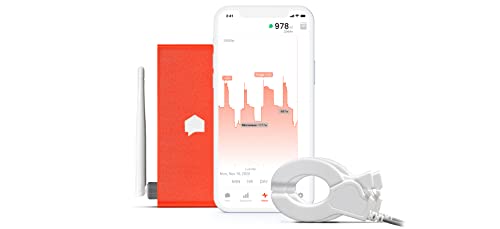
If you’re looking to streamline your electricity usage and save on bills, the Sense Energy Monitor is an excellent choice. This device tracks your electricity consumption in real-time, allowing you to access data via iOS, Android, or web apps. You can set custom notifications for pivotal devices, ensuring nothing essential goes unnoticed. While it meets safety standards, some users report mixed experiences with device detection. However, the “Always On” feature helps you identify baseline energy usage, enabling you to cut unnecessary costs. Overall, the Sense Energy Monitor empowers you to enhance efficiency and security in your home.
Best For: Homeowners looking to monitor and optimize their electricity usage to save on utility bills.
Pros:
- Real-time monitoring allows users to track energy consumption instantly.
- Custom notifications help ensure important devices are monitored effectively.
- The “Always On” feature aids in identifying baseline energy usage, promoting energy efficiency.
Cons:
- Some users experience difficulties with device detection, leading to inconsistent monitoring.
- Compatibility issues may arise for users in regions with different electrical standards (e.g., 220V).
- Reports of data lag can cause discrepancies in real-time energy usage display.
Sense Flex Home Energy Monitor

The Sense Flex Home Energy Monitor stands out for homeowners looking to optimize their energy consumption with real-time insights. By combining the Sense Monitor and Flex Sensors, it tracks up to two circuits and even integrates with solar or generator systems. You can monitor your energy use remotely via iOS, Android, or web apps, receiving custom notifications for critical devices. Installation takes 15-60 minutes, depending on your experience, but you might face initial setup challenges. Once running, it effectively identifies energy patterns and can alert you to possible appliance failures, helping you save on utility bills.
Best For: Homeowners seeking to optimize energy consumption and monitor their energy usage in real-time.
Pros:
- Provides real-time insights into energy consumption, helping users identify savings opportunities.
- Supports monitoring of multiple circuits, including solar and generator systems.
- Offers remote access through mobile and web apps, with customizable alerts for critical devices.
Cons:
- Initial setup may be challenging, especially for users with limited experience or mesh network issues.
- Mixed reviews regarding customer support, particularly during account setup and device recognition.
- Some users recommend professional installation due to the complexity of electrical panels.
Sense Energy Monitor with Solar

For homeowners looking to optimize their energy consumption while harnessing solar power, the Sense Energy Monitor with Solar stands out as a top choice in 2025. This monitor tracks your electricity usage and solar production in real time, helping you maximize your solar energy. With custom notifications for critical devices, it safeguards your home while providing insights into your energy patterns. Although installation requires a professional, users report significant energy savings by identifying inefficiencies. While it may struggle with some devices, many find it pays for itself quickly, making it a valuable tool for solar power enthusiasts.
Best For: Homeowners with solar power systems looking to optimize energy consumption and monitor usage in real time.
Pros:
- Provides real-time tracking of electricity usage and solar production.
- Custom notifications help safeguard critical devices, preventing potential disasters.
- Users report significant energy savings by identifying and correcting inefficiencies.
Cons:
- Installation requires professional assistance, making it less DIY-friendly.
- May struggle to identify all devices, particularly those with varying energy signatures.
- Limited to the United States and Canada, restricting availability for international users.
Emporia Vue 3 Home Energy Monitor

Looking for a reliable energy monitoring solution? The Emporia Vue 3 Home Energy Monitor is your answer. This UL Listed device installs easily in your circuit panel and supports various electrical systems. With 24/7 monitoring, you can manage your energy consumption in real-time from your smartphone or web app. The included sensors accurately track critical loads, ensuring you’re always informed about your usage. Plus, with features like automated energy management based on peak demand, you’ll save on utility bills. Experience organized installations with enhanced screw terminals that reduce clutter, making your energy management seamless and efficient.
Best For: Homeowners looking for a reliable and efficient way to monitor and manage their energy consumption in real-time.
Pros:
- UL Listed for safety and reliability, ensuring it meets rigorous electrical standards.
- 24/7 real-time monitoring via smartphone or web app allows for proactive energy management.
- Includes sixteen branch sensors for accurate tracking of critical loads, helping to identify energy usage patterns.
Cons:
- Requires a 2.4 GHz WiFi connection for data monitoring, which may limit usability for some users.
- Additional sensors for compatibility with certain systems are sold separately, potentially increasing overall costs.
- Real-time data is only available for 3 hours when the app is open, which may not suit all monitoring needs.
Emporia Vue 3 Home Energy Monitor
Emporia Vue 3 Home Energy Monitor stands out as an ideal choice for homeowners enthusiastic to take control of their energy consumption. Its UL certification guarantees safety, preventing hazards like overheating and short circuits. Installation is simple, using clamp-on sensors compatible with various electrical systems. You can manage your energy 24/7 via a user-friendly app, receiving real-time data and actionable notifications to optimize usage. With sixteen branch sensors, it accurately tracks critical appliances like air conditioners and water heaters. Enjoy organized installations with enhanced screw terminals that minimize clutter. Take charge of your energy efficiency and start saving on utility bills today!
Best For: Homeowners looking to monitor and optimize their energy consumption effectively.
Pros:
- UL Listed for safety, ensuring reliable performance and protection against hazards.
- User-friendly app provides real-time data and notifications for effective energy management.
- Includes sixteen branch sensors for accurate tracking of multiple critical appliances.
Cons:
- Requires a 2.4 GHz WiFi connection, which may limit monitoring for some users.
- Installation may require professional assistance for those unfamiliar with electrical systems.
- Additional sensors for expanded compatibility are sold separately, increasing the overall cost.
Smart Home Energy Monitor with Accurate Energy Consumption Tracking

If you’re a tech-savvy homeowner enthusiastic to monitor and optimize your energy consumption, the Refoss Smart Home Energy Monitor is an excellent choice. This device offers real-time tracking of your energy use with 16 branch circuit sensors, making it easy to see where your electricity goes. Installation takes about 30-45 minutes, and it integrates seamlessly with the Refoss app and Home Assistant. You’ll enjoy detailed energy data for up to three years, helping you save 10%-20% on bills. Plus, smart alerts notify you of unusual spikes, ensuring you stay on top of your energy efficiency goals.
Best For: Tech-savvy homeowners looking to monitor and optimize their energy consumption effectively.
Pros:
- Real-time tracking of energy usage with 16 branch circuit sensors for detailed insights.
- Easy installation process, typically completed within 30-45 minutes.
- Integration with Home Assistant and smart alerts for unusual energy spikes enhances energy management.
Cons:
- Requires basic electrical knowledge for installation, which may not be suitable for all users.
- Some users report a need for improvements in the app’s interface and additional features.
- The device may not be compatible with all electrical systems, limiting its usability for some homeowners.
Emporia Vue 3 Home Energy Monitor

For homeowners seeking a reliable and efficient way to monitor their energy usage, the Emporia Vue 3 Home Energy Monitor stands out with its ability to track up to 16 circuits simultaneously. This smart device offers real-time electricity monitoring with ±2% accuracy, ensuring you’re always informed about your energy consumption. Installation is straightforward, especially for those familiar with electrical panels. Users praise the app’s functionality for actionable insights and management of costs—some report saving markedly by optimizing appliance usage. With UL certification for safety and a solid customer rating of 4.6 stars, it’s a great investment for energy efficiency.
Best For: Homeowners looking to optimize energy consumption and reduce electric bills through real-time monitoring of their electricity usage.
Pros:
- Easy installation for those familiar with electrical panels, making it accessible for DIY enthusiasts.
- Real-time data with ±2% accuracy allows users to make informed decisions about energy usage.
- UL Certified for safety, ensuring compliance with rigorous electrical standards in the U.S. and Canada.
Cons:
- Limited to monitoring up to 16 circuits, which may not suffice for larger homes with more electrical needs.
- Some users desire improved historical data comparison features in the app for better tracking over time.
- Sensor size may require checking space in the breaker panel before purchase, potentially limiting installation options.
Factors to Consider When Choosing Energy Monitors
When choosing an energy monitor, you’ll want to contemplate several key factors. Think about the accuracy of the readings, how complex the installation might be, and whether it’s compatible with your home systems. Also, check if it offers real-time data access and useful alerts to keep you informed.
Monitoring Accuracy and Precision
While choosing an energy monitor, it’s crucial to prioritize monitoring accuracy and precision, as these factors profoundly influence the reliability of your energy usage data. Look for monitors that boast an accuracy level of around ±2%, ensuring you get dependable readings. Clamp-on sensors often deliver more precise measurements compared to those relying on assumed voltage, so consider this when making your selection. Additionally, the ability to track real-time data alongside historical trends helps you identify consumption patterns and optimize usage. Be aware that some monitors might struggle with devices that have varying energy signatures, leading to inaccuracies. Finally, examine data retention capabilities, as minute or hourly storage can greatly enhance your analysis of energy consumption trends over time.
Installation Complexity and Requirements
Choosing an energy monitor involves considering installation complexity and requirements, as these factors can greatly impact your overall experience. Some monitors need professional installation for safe handling of electrical panels, while others allow for a straightforward DIY setup that takes just 30-60 minutes. Clamp-on sensors simplify installation, fitting easily around existing wires, unlike models requiring extensive wiring modifications. It’s essential to check compatibility with your electrical system, as some support single-phase or multi-phase setups, affecting installation ease. Be aware of potential connectivity challenges, especially with mesh networks or specialized solar systems. Finally, assess the installation location; overcrowded breaker panels may require additional planning or equipment for a proper fit.
Compatibility With Home Systems
How can you guarantee your energy monitor seamlessly integrates with your home’s systems? First, check its compatibility with your electrical setup, whether it’s single-phase, split-phase, or multi-phase. This is vital for effective installation and operation. Next, confirm the monitor’s voltage range—like 110-120V or 220-240V—to make sure it matches your supply. It’s also essential to see if the monitor integrates with your existing smart home systems, such as Home Assistant, for streamlined automation. Be mindful of geographical compatibility, as some devices may not adhere to local electrical standards. Finally, verify the monitor can handle the number of circuits in your home, especially if you have a larger setup, to avoid any limitations on monitoring capabilities.
Real-Time Data Access
Accessing real-time data is essential when selecting an energy monitor, as it empowers you to track your electricity usage instantly and make informed decisions. With many energy monitors, you can use mobile applications compatible with iOS and Android, giving you the flexibility to view your energy data from anywhere. Real-time monitoring helps you identify peak usage times, allowing you to adjust your habits and benefit from time-of-use rate plans for additional savings. Some monitors even offer custom notifications for specific devices, alerting you to unusual energy spikes that could lead to higher bills. By tracking “Always On” power consumption, you can enhance your energy management strategy and considerably reduce your overall energy costs.
Alerts and Notifications Features
Real-time data access sets the stage for effective energy management, but alerts and notifications take it a step further by keeping you informed about your energy consumption. Custom notifications let you set alerts for critical devices, helping prevent potential failures or costly repairs. You can receive real-time alerts for unusual energy spikes, optimizing your usage and identifying inefficiencies. Some monitors even offer automated notifications based on time-of-use rates, enabling you to adjust your consumption patterns for maximum savings. Alerts for baseline energy consumption, like “Always On” power, help you spot unnecessary usage and reduce waste. Plus, integration with mobile apps allows you to manage your energy consumption and receive alerts remotely, enhancing your overall energy management efficiency.
Historical Data Storage
While you focus on optimizing your energy usage, historical data storage plays an essential role in understanding long-term consumption trends. By tracking your energy habits over time, you can identify patterns that lead to smarter, informed decisions. Some energy monitors offer extensive options for retaining this data, allowing you to store usage information for days, months, or even years. This capability enables you to analyze your energy consumption effectively. Look for devices that let you export historical data to formats like Excel for deeper analysis. Additionally, consider how granular the data is; some monitors provide minute-by-minute data, while others maintain hourly records indefinitely. This information can also help you adjust usage according to time-of-use rate plans, maximizing savings.
Energy Management Capabilities
When choosing an energy monitor, it is crucial to evaluate its energy management capabilities to confirm it meets your needs effectively. Look for devices that provide real-time data tracking, giving you immediate insights into your energy consumption patterns and highlighting potential savings. Verify the monitor supports time-of-use rate plans, allowing you to optimize energy usage based on varying electricity costs throughout the day. Choose monitors capable of tracking multiple circuits or appliances simultaneously for a detailed analysis of energy consumption in different areas of your home. Consider devices that offer customizable notifications for critical appliances to prevent failures and reduce energy waste. Finally, opt for monitors with data export capabilities to analyze long-term trends and enhance your energy management strategies.
Price and Warranty Options
Choosing the right energy monitor involves more than just evaluating its features; you also need to take into account price and warranty options. Prices can range considerably, with some models under $100 while others exceed $300, so determine your budget first. Don’t overlook warranty options; longer warranties, up to 2 years, often reflect the manufacturer’s confidence in durability. Look for products with satisfaction guarantees or return policies, allowing you to test functionality risk-free. Additionally, think about the potential savings—many users see reductions of 10%-20% on their energy bills. Finally, check for any extra costs related to accessories or sensors, as these can affect your total investment in the energy monitoring system.


