

Looking to optimize your electronic devices in 2025? Check out the top seven EMI filters like the 120V Power EMI Line Filter for home appliances and the Shield Pure Power Plug-In EMF Filter for cleaner power. Consider the Uxcell Noise Suppressor for versatility and Briidea’s filters for reducing electric noise. Don’t forget the E-outstanding filter for its compact design. Each option brings unique benefits. Keep exploring to discover which filter suits your needs best!
120V Power EMI Line Filter for Home Appliances and Equipment
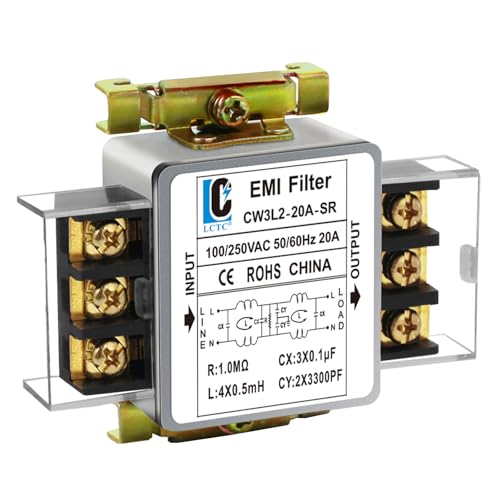
The 120V Power EMI Line Filter is your ideal choice if you’re looking to enhance the performance of home appliances and industrial or medical equipment. This noise suppressor operates efficiently at 120V, handling up to 20A with a frequency range of 50/60Hz. With its compact size and lightweight design, you can easily integrate it into your setup. Featuring four inductors and multiple capacitors, it effectively reduces electromagnetic interference. Customers rave about its performance, giving it a perfect 5.0-star rating. Plus, with a 30-day return policy, you can try it risk-free. Optimize your electronics today with this top-rated filter!
Best For: Those seeking to reduce electromagnetic interference in home appliances, industrial, or medical equipment.
Pros:
- Highly effective noise suppression with multiple inductors and capacitors.
- Compact and lightweight design for easy integration into various setups.
- Excellent customer feedback with a perfect 5.0-star rating from users.
Cons:
- Limited to 120V applications, which may not suit all users.
- Rated for 20A, which could be insufficient for some high-power devices.
- Availability may be restricted as it was first listed on Amazon in July 2025.
Shield Pure Power Plug-In EMF Filter (2 Pack)
Product not found or API error.
For anyone looking to enhance their electronic devices’ performance and reduce harmful electrical interference, the Shield Pure Power Plug-In EMF Filter (2 Pack) is an ideal solution. Each unit effectively filters out dirty electricity from power lines, providing cleaner, more stable power in your home or office. For best results, you’ll want to install at least two filters—one on each phase of your electrical system. If your space exceeds 2500 sqft, consider adding more for balanced coverage. Simply plug these filters into any 120V outlet to experience smoother power flow, potentially improving appliance efficiency and reducing electricity consumption.
Best For: Individuals and businesses seeking to improve electronic performance and reduce electrical interference in their environments.
Pros:
- Filters out harmful electrical noise for cleaner power delivery to devices.
- Easy installation by simply plugging into any 120V outlet.
- Potentially increases appliance efficiency and reduces electricity consumption.
Cons:
- Requires multiple units for optimal effectiveness in larger spaces.
- Effectiveness may vary depending on the specific electrical setup and environment.
- Initial investment may be considered high for some users.
Uxcell AC 115/250V 20A CW4L2-20A-S Noise Suppressor Power EMI Filter
Product not found or API error.
Designed for those who need reliable noise suppression in small electronic setups, the Uxcell AC 115/250V 20A CW4L2-20A-S Noise Suppressor Power EMI Filter stands out with its compact dimensions and robust performance. With its rated current of 20A and compatibility with AC 115/250V, it works effectively in various applications, including CNC systems and LED lighting. Installation is straightforward, fitting neatly in electrical junction boxes. Users appreciate its ability to notably reduce noise, enhancing system longevity. Despite some concerns about installation proximity, overall feedback highlights its effectiveness and value in maintaining clean power.
Best For: Individuals seeking an effective solution for noise suppression in small electronic equipment and systems.
Pros:
- Effective noise reduction: Users report a significant decrease in EMI and RFI interference, improving overall performance.
- Easy installation: Compact design allows for straightforward fitting in electrical junction boxes.
- Versatile use: Suitable for various applications, including CNC systems and LED lighting.
Cons:
- Ground terminal proximity: Some users noted the ground terminal’s close location to AC terminals could pose installation challenges.
- Mixed value perception: While many find it effective, some consider it slightly pricey for the performance offered.
- Manufacturing origin: A few users mentioned concerns about the product being made in China, affecting their perception of quality.
Briidea Dirty Electricity Filters for Clean Power Supply

Briidea Dirty Electricity Filters are ideal for homeowners and small business owners looking to enhance their power quality. These filters effectively reduce high-frequency noise, providing a clean and stable power supply with easy plug-and-play installation. Made from fire-resistant materials, they promise durability. Users appreciate the potential health benefits, such as reduced headaches and fatigue, though experiences vary. While some report improvements, others express skepticism about effectiveness and safety concerns. Overall, these filters can prolong your devices’ lifespan, potentially saving you money on repairs, making them a practical choice for optimizing your electronic environment.
Best For: Homeowners and small business owners seeking to improve power quality and reduce electronic interference.
Pros:
- Reduces high-frequency noise for a stable and clean power supply.
- Easy plug-and-play installation without interfering with other devices.
- Potentially prolongs the lifespan of electronic devices, saving on repair costs.
Cons:
- Mixed user experiences regarding effectiveness and health benefits.
- Safety concerns reported, including instances of electric shocks when unplugged.
- Some skepticism about increased electromagnetic radiation when in use.
E-outstanding EMI Filter 10A Power Noise Filter

The E-outstanding EMI Filter 10A Power Noise Filter stands out as an ideal choice for anyone seeking reliable noise reduction in sensitive equipment. With a rated current of 1-10A and a voltage range of 115/250VAC, it effectively mitigates interference across various applications, from precision measuring instruments to automotive electronics. Weighing just 2.46 ounces and featuring a compact design, it’s easy to integrate into your setup. Users praise its performance, noting significant reductions in flickering LED lights and motor noise. Plus, it comes with a 30-day return guarantee, ensuring you can purchase with confidence.
Best For: Those seeking effective noise reduction solutions for sensitive electronic equipment and applications.
Pros:
- Compact design makes it easy to integrate into various setups.
- Effective in significantly reducing motor noise and flickering LED lights.
- Versatile applications across multiple industries, including automotive and automation systems.
Cons:
- Some users reported no change in static interference from LED lights.
- Limited to a rated current of 10A, which may not suit all applications.
- Customer reviews indicate mixed experiences with effectiveness in certain scenarios.
60 Pieces Clip-on Ferrite Ring Core Noise Suppressor Cable Clips
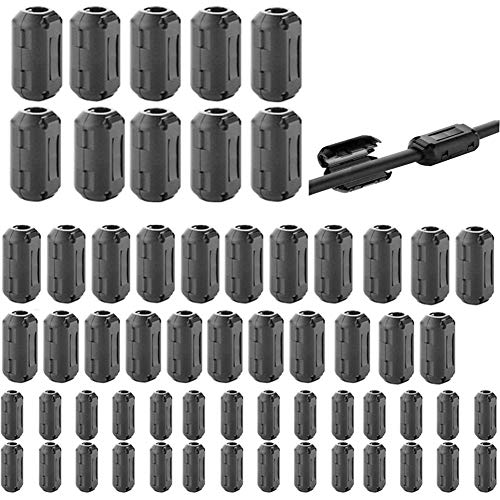
For tech enthusiasts and professionals dealing with sensitive electronic equipment, the 60 Pieces Clip-on Ferrite Ring Core Noise Suppressor Cable Clips stand out as an essential tool. These clips effectively reduce electromagnetic interference (EMI) across various cables, including USB and audio lines. With inner diameters ranging from 3mm to 13mm, they’re versatile and easy to install, thanks to the elastic clip fastener. Users praise their performance in setups like cable modems and amateur radios. Packaged by size for convenience, these ferrite clips are a must-have for optimizing your devices and ensuring clean signal quality.
Best For: Tech enthusiasts and professionals managing sensitive electronic equipment that require noise suppression for optimal performance.
Pros:
- Effective Noise Reduction: Significantly reduces electromagnetic interference (EMI) for various cables, improving signal quality.
- Versatile Sizes: Available in multiple inner diameters (3mm to 13mm) to accommodate different cable types.
- Easy Installation: Features an elastic clip fastener for straightforward application without the need for special tools.
Cons:
- Mixed Results: Some users report continued interference in specific applications, such as with garage door openers.
- Occasional Installation Issues: May require electrical tape to secure loose ferrite clips on certain cables.
- Limited Warranty Information: Users need to refer to the product page for specific warranty details, which may not be clearly stated.
Briidea Dirty Electricity Filters for Clean Power Supply
Designed specifically for individuals seeking a healthier living environment, the Briidea Dirty Electricity Filter excels at reducing high-frequency noise generated by electronic devices. Utilizing advanced EMI filtering technology, it guarantees a stable and clean power supply with a simple plug-and-play installation. The fire-resistant casing adds durability and reliability. Users report mixed experiences, with some noticing improvements in issues like headaches and fatigue, while others express skepticism. Besides enhancing device lifespan and reducing power fluctuations, it may help you save on repair costs. However, be cautious, as some users reported safety concerns, including electric shocks when unplugging the device.
Best For: Individuals seeking to reduce electromagnetic noise and improve their living environment.
Pros:
- Effective EMI filtering: Reduces high-frequency noise for a cleaner power supply.
- Easy installation: Simple plug-and-play design allows for hassle-free setup.
- Durable casing: Made from fire-resistant materials for added safety and longevity.
Cons:
- Mixed results: User feedback varies, with some experiencing no benefits.
- Safety concerns: Reports of electric shocks when unplugging the device.
- Skepticism about health benefits: Some users doubt the claims of improved health outcomes.
Factors to Consider When Choosing Emi Filters
When you’re choosing EMI filters, consider key factors like voltage and current ratings to guarantee compatibility with your system. You’ll also want to think about frequency compatibility and how versatile the filter is for different applications. Finally, don’t overlook noise reduction efficiency, as it directly impacts performance.
Voltage and Current Ratings
Selecting the right EMI filter hinges considerably on understanding voltage and current ratings. Make certain the voltage rating matches your system’s operating voltage, typically 115V or 250V for various applications. The current rating is just as vital; choose a filter that can handle the maximum current load of your devices, which is generally between 10A and 20A for household and industrial use. It’s essential to verify that the filter’s specifications align with your intended application, whether it’s AC or DC, to avoid damage or inefficiencies. Additionally, consider the installation environment—select a filter with an appropriate enclosure rating, like IP ratings, especially for industrial settings, to guarantee durability against dust and moisture.
Frequency Compatibility
Understanding frequency compatibility is essential to choosing the right EMI filter for your application. EMI filters operate effectively within specific frequency ranges, typically aligned with the 50/60Hz of your electrical system. You’ll notice that the filtering performance greatly depends on the noise frequency it’s designed to suppress; higher frequencies may need specialized techniques. When selecting a filter, consider the frequency spectrum of your devices to guarantee peak performance. Different components, like inductors and capacitors, are tailored for specific frequency bands, so evaluate their specifications carefully. This understanding of frequency compatibility is vital for effective noise reduction and protecting sensitive electronic equipment from interference, ultimately enhancing the reliability and longevity of your devices.
Installation Requirements
Choosing the right EMI filter involves careful consideration of installation requirements to guarantee peak performance and compatibility with your electrical system. First, check the filter’s voltage rating—ensure it matches your setup, whether it’s 120V or 250V—and confirm its current capacity, such as 20A. Make sure the filter can be easily installed according to the manufacturer’s guidelines, which might suggest specific placements for ideal effectiveness. Also, verify that the dimensions and mounting options fit within your existing electrical junction boxes. Pay attention to the installation process: some filters are plug-and-play, while others need more complex integration. Finally, evaluate the installation hole size and distance, as these factors can impact ease and safety, especially in tight spaces.
Application Versatility
Installation requirements set the foundation for effective EMI filter usage, but application versatility plays a significant role in ensuring you get the right fit for your needs. These filters can adapt to various environments—residential, commercial, or industrial—helping to mitigate electromagnetic interference effectively. You’ll find filters designed specifically for devices like home appliances, medical equipment, and industrial machinery, ensuring compatibility and performance. User-friendly options, such as plug-in models, allow for easy installation in standard outlets, making them accessible for different applications. Keep in mind that larger spaces may need multiple units for ideal coverage. Versatile filters not only tackle noise in power lines but also enhance data and signal cables, boosting your electronic devices’ performance across diverse scenarios.
Noise Reduction Efficiency
When evaluating EMI filters, noise reduction efficiency is essential, as it directly impacts how well your devices perform in noisy environments. Look for filters with higher decibel (dB) ratings, as these indicate greater effectiveness in suppressing electromagnetic interference. Many filters combine inductors and capacitors, with specific configurations like 4 × 0.5mH inductors enhancing noise attenuation. Remember, some filters target radiated noise while others focus on conducted noise. For ideal results, consider using multiple filters in various locations, especially in larger spaces or multi-phase systems. User feedback often highlights how well specific filters reduce interference, such as RFI from inverter generators or flickering in LED lighting, emphasizing the need for tailored solutions based on your unique applications.
Size and Form Factor
Size and form factor play a crucial role in selecting EMI filters, as they can greatly impact your installation options and compatibility with existing systems. When choosing a filter, consider its dimensions; for example, compact filters measuring 2.95 x 1.38 x 3.35 inches are ideal for tight spaces, while larger options may need more room. Don’t overlook the weight either—lighter filters are often easier to mount without extra support. Pay attention to installation hole sizes, such as 7.5cm spacing with a 5mm diameter, to guarantee secure mounting. Additionally, the form factor—whether plug-in or in-line—affects installation ease and flexibility across various devices. Making the right choice here can streamline your setup and enhance performance.


